Spine & Back Health
Sciatica Guide
Evidence-based overview of sciatic pain, look-alikes, and practical steps to calm irritated nerves.
The Basics
What Is Sciatica, Really?
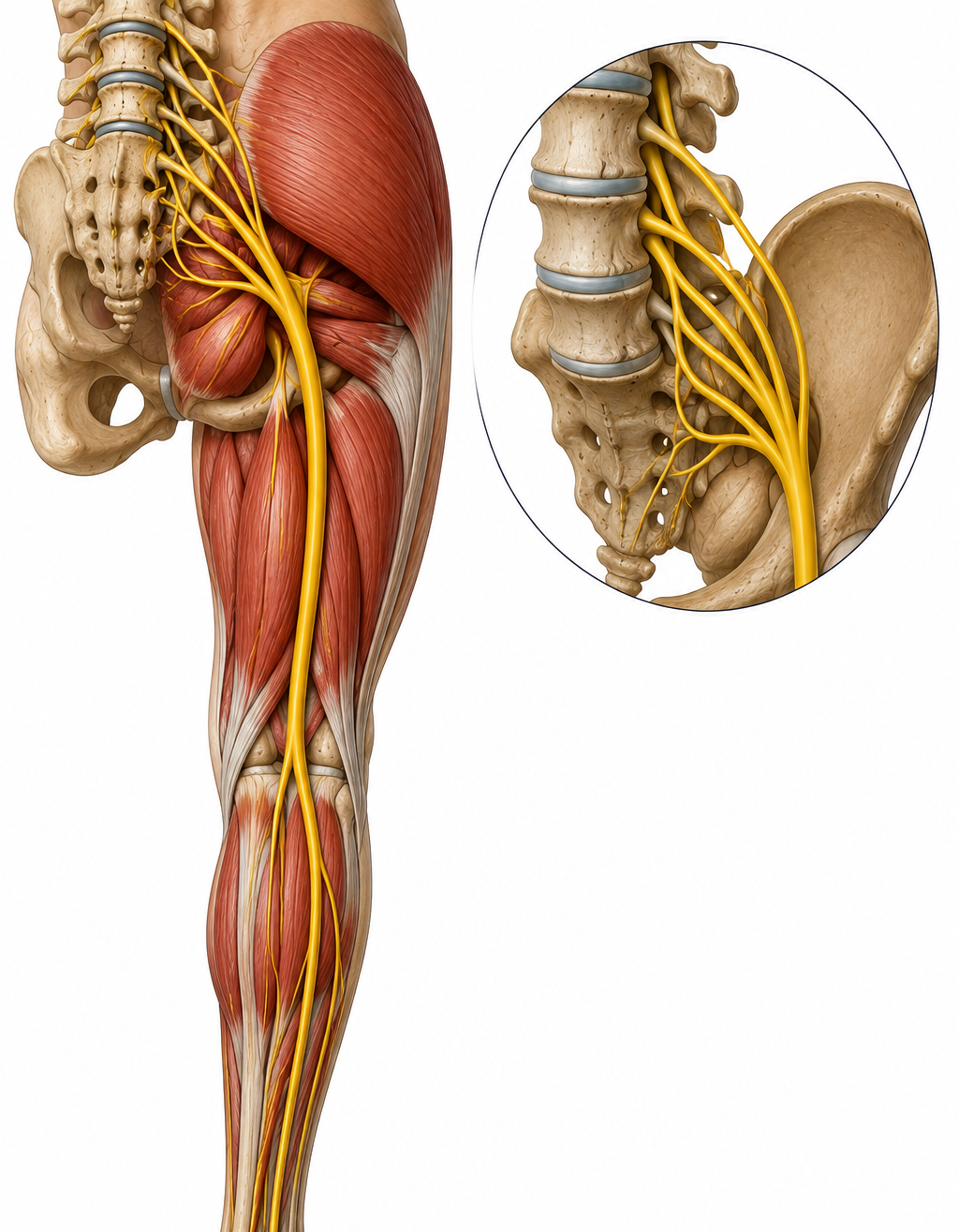
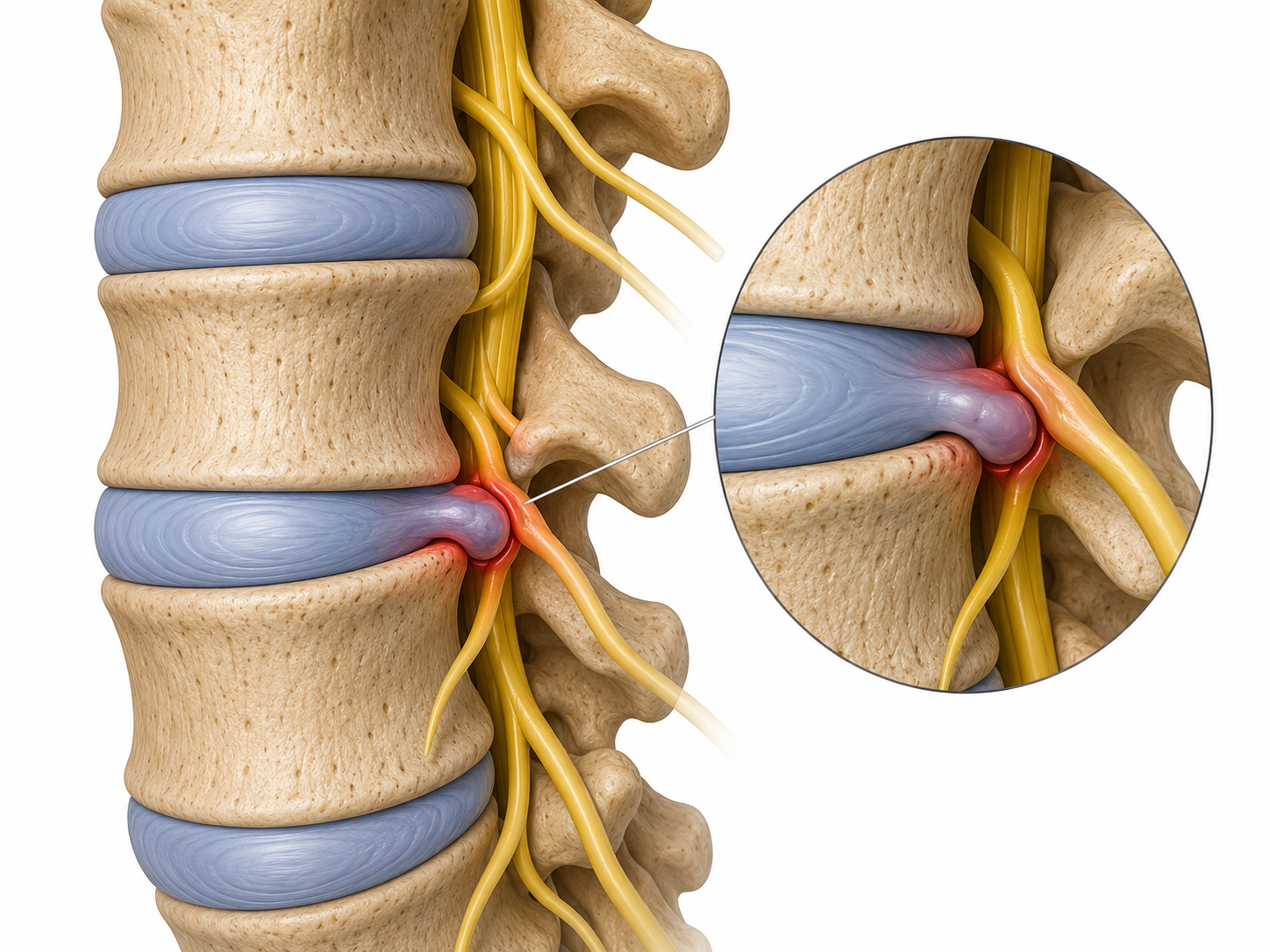
Sciatica is a symptom, not a diagnosis. It describes pain, numbness, tingling, or weakness radiating along the sciatic nerve pathway. The nerve originates from the L4–S3 nerve roots, and true sciatica involves nerve compression or irritation — most commonly from a disc herniation, which accounts for roughly 90% of cases, but also from spinal stenosis, foraminal narrowing, or degenerative changes.
The term is widely misused. Many cases labeled “sciatica” are actually referral pain from muscles, facet joints, or the sacroiliac joint. Distinguishing true nerve-root involvement from these look-alikes is the first step toward effective, targeted care.
Not All Leg Pain Is Sciatica
Several common conditions mimic sciatica but arise from entirely different sources.
Piriformis Syndrome
Sciatic nerve compressed by the piriformis muscle deep in the gluteal region; no spinal pathology.
Sacroiliac Joint Dysfunction
SI joint inflammation or instability referring pain into the buttock and posterior thigh.
Femoral Nerve Irritation
Anterior thigh and groin pain, often confused with high sciatic pain.
Hamstring Tendinopathy
Proximal hamstring pain at the ischial tuberosity, worsened with sitting.
Vascular Claudication
Leg pain from arterial insufficiency, worsened with walking, relieved by rest (not position).
Meralgia Paresthetica
Lateral thigh burning from lateral femoral cutaneous nerve compression.
How It’s Diagnosed
Clinical Assessment
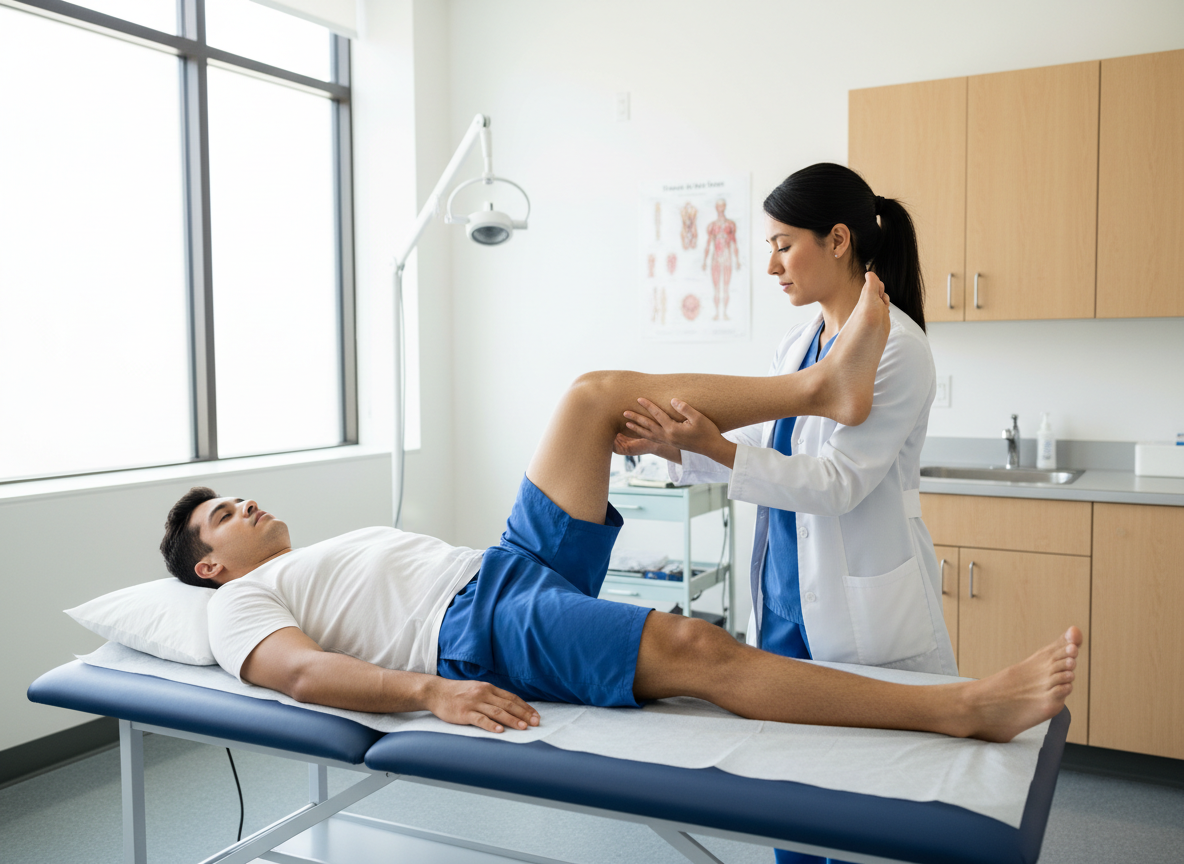
Accurate diagnosis begins with a thorough patient history — onset, mechanism, symptom behavior, and aggravating or relieving factors. A neurological examination follows, using dermatomal sensory testing, myotomal strength testing, and reflex testing to localize the affected nerve root.
Orthopaedic provocation tests — the straight leg raise, slump test, and crossed SLR — carry high sensitivity for disc herniation. Imaging confirms the picture: MRI is the gold standard for soft tissue, X-ray reveals bony changes, and EMG or nerve conduction studies are reserved for chronic or complex cases.
What Causes Sciatic Nerve Irritation?
Lumbar Disc Herniation
Nucleus pulposus extrusion compressing a nerve root; accounts for ~90% of true sciatica.
Spinal Stenosis
Narrowing of the spinal canal or foramen, more common in adults over 50.
Degenerative Disc Disease
Height loss and osteophyte formation reducing nerve root space.
Spondylolisthesis
Vertebral slippage creating dynamic instability and nerve compression.
Piriformis Muscle Hypertension
Non-spinal compression of the sciatic nerve at the buttock.
Acute Inflammation
Nerve root chemical irritation from inflammatory mediators released by disc material, even without direct mechanical compression.
Conventional Medical Approaches
NSAIDs & Analgesics
First-line pharmacological management; reduce inflammation and pain; limited evidence for long-term use; GI and cardiovascular risks with prolonged use.
Oral Corticosteroids
Short-course steroid tapers reduce acute nerve root inflammation. Evidence supports short-term relief but does not alter long-term outcomes. Best used as a bridge to active rehabilitation rather than a standalone treatment.
Epidural Steroid Injections
Transforaminal or interlaminar injections deliver corticosteroid directly to the epidural space. Provide meaningful short-term relief in acute radiculopathy; evidence for long-term benefit is limited. Useful when conservative care plateaus.
Surgical Referral
Microdiscectomy is indicated for progressive neurological deficit, cauda equina syndrome, or failure of 6–12 weeks of conservative care. Outcomes are excellent for disc-mediated radiculopathy with clear surgical targets.
Chiropractic Care for Sciatica
Spinal manipulation and mobilisation address the mechanical contributors to sciatic nerve irritation — restoring segmental motion, reducing intradiscal pressure, and improving neuromusculoskeletal function. Randomised controlled trials support chiropractic care as an effective conservative intervention for lumbar radiculopathy.
Spinal Manipulation
High-velocity, low-amplitude thrust techniques restore restricted lumbar segmental motion, reduce disc protrusion pressure, and modulate pain via neurophysiological pathways including endogenous opioid release and descending inhibitory system activation.
Flexion-Distraction
A gentle, non-thrust decompression technique applied to the lumbar spine. Increases disc height, reduces intradiscal pressure, and creates a negative pressure gradient that encourages nucleus centralisation — particularly effective for disc-mediated radiculopathy.
Soft Tissue and Mobilisation
Instrument-assisted soft tissue mobilisation, myofascial release, and joint mobilisation address muscle guarding, fascial restrictions, and segmental hypomobility that perpetuate nerve irritation and limit rehabilitation capacity.
Therapeutic Exercise & Rehabilitation
Exercise is the most evidence-supported long-term intervention for sciatica. A progressive, individualised program addresses the root mechanical drivers — restoring lumbar stability, nerve mobility, and functional capacity. Passive treatments alone do not prevent recurrence.
Neural Mobilisation
Gentle nerve flossing and sliders restore sciatic nerve excursion, reduce mechanosensitivity, and improve conduction. Performed within pain-free range; aggressive stretching worsens neurogenic inflammation.
Lumbar Stabilization
Transversus abdominis and multifidus activation re-establishes segmental control. Graded from supine dead-bug progressions to standing loaded movements as tolerance increases.
Hip Strength
Gluteus medius and maximus weakness alters lumbar load distribution. Clamshells, lateral band walks, and single-leg hip hinges restore pelvic stability and reduce lumbar compensatory stress.
McKenzie Extension
Directional preference assessment guides centralisation exercises. Extension bias is appropriate for disc-mediated radiculopathy with peripheralisation on flexion; must be individualised.
Core Endurance
McGill Big Three — curl-up, side plank, bird-dog — build spinal endurance without compressive loading. Evidence-based sequence for lumbar rehabilitation and recurrence prevention.
Progressive Loading
Deadlift variations, Romanian deadlifts, and goblet squats restore functional capacity and tissue resilience. Introduced in later rehabilitation phases when acute irritability has resolved.
Regenerative Medicine
Photobiomodulation & Laser Therapy
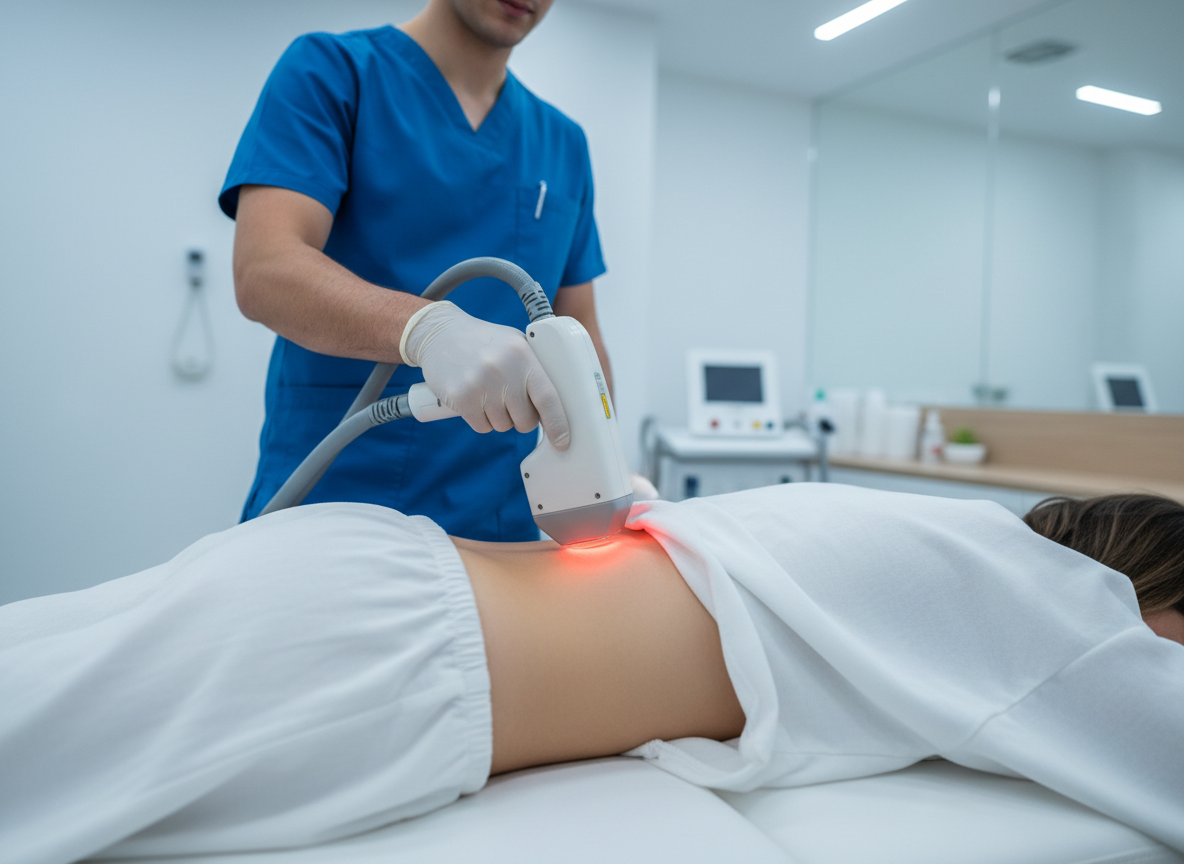
Class IV laser therapy (photobiomodulation) delivers near-infrared and red light energy to targeted tissue, stimulating mitochondrial ATP production, reducing pro-inflammatory cytokines, and accelerating axonal regeneration. For sciatic radiculopathy, laser is applied along the nerve pathway — from the lumbar paraspinals to the sciatic notch and down the extremity.
Randomised controlled trials demonstrate significant reductions in VAS pain scores, improvements in straight leg raise, and accelerated return to function compared to sham and conventional physiotherapy alone. Laser is non-invasive, well-tolerated, and can be used in the acute phase when manual therapy options are limited.
Calming an Irritated Sciatic Nerve
Acute flare-ups respond to a combination of position management, graded movement, and load modification. Complete rest is counterproductive — gentle, pain-guided activity maintains nerve mobility and prevents deconditioning.
Positioning
Side-lying with a pillow between the knees reduces lumbar lateral shear and piriformis tension. Avoid prolonged sitting, especially on hard surfaces or with wallet in back pocket.
Ice vs. Heat
Ice (15 min) in the first 48–72 hours reduces local inflammation. Moist heat thereafter relaxes paraspinal spasm and increases tissue extensibility. Alternate as tolerated in subacute phases.
Gentle Walking
Low-load rhythmic walking maintains intervertebral disc nutrition through osmotic pumping, preserves nerve mobility, and avoids the deconditioning of bed rest. Start with 5–10 min and progress daily.
Avoid Aggravators
Prolonged forward bending, heavy lifting from the floor, and sustained sitting compress the posterior disc and increase radicular symptoms. Identify and modify your personal aggravating postures.
Sleep Position
Supine with knees supported on a pillow (semi-Fowler position) unloads the lumbar discs and reduces neural tension. Avoid prone sleeping in acute phases.
Return to Activity
Gradual return guided by centralisation of symptoms. When leg pain retreats toward the spine, activity is progressing appropriately. Increase activity when symptoms centralise; reduce when they peripheralise.
When to Seek Immediate Care
Most sciatica resolves with conservative care within 6–12 weeks. The following signs require urgent medical evaluation — do not manage these at home.
🚨 Emergency — Go Now
Cauda equina syndrome: bilateral leg weakness, saddle anaesthesia (numbness in the groin/inner thighs), or loss of bladder or bowel control. This is a surgical emergency.
⚠️ Urgent — See a Doctor This Week
Rapidly progressive leg weakness, foot drop, or severe unrelenting pain unresponsive to any position. Neurological deficit may indicate surgical nerve compression requiring prompt imaging.
📋 See a Clinician
Pain lasting more than 6 weeks without improvement, first episode of severe radiculopathy, or symptoms in anyone under 20 or over 55 without prior diagnosis. A baseline assessment guides appropriate care.
References & Sources
This page is for educational purposes only and does not constitute medical advice. Always consult a qualified healthcare provider for diagnosis and treatment.
- Ropper AH, Zafonte RD. Sciatica. N Engl J Med. 2015;372(13):1240–1248. doi:10.1056/NEJMra1410151
- Koes BW, van Tulder MW, Peul WC. Diagnosis and treatment of sciatica. BMJ. 2007;334(7607):1313–1317. doi:10.1136/bmj.39223.428495.BE
- Spijker-Huiges A, et al. Extra-spinal sciatica and sciatica mimics: a scoping review. Eur J Gen Pract. 2021;27(1):1–9. PMC7532296
- Deville WL, et al. The test of Lasège: systematic review of the accuracy in diagnosing herniated discs. Spine. 2000;25(9):1140–1147. doi:10.1097/00007632-200005010-00016
- van der Windt DA, et al. Physical examination for lumbar radiculopathy due to disc herniation in patients with low-back pain. Cochrane Database Syst Rev. 2010;(2):CD007431. doi:10.1002/14651858.CD007431.pub2
- Santilli V, et al. Chiropractic manipulation in the treatment of acute back pain and sciatica with disc protrusion: a randomized double-blind clinical trial. Spine J. 2006;6(2):131–137. doi:10.1016/j.spinee.2005.08.001
- Gudavalli MR, et al. Changes in intradiscal pressure during flexion-distraction type of chiropractic procedure: a pilot cadaveric study. Integr Med Res. 2022;11(1):100797. doi:10.1016/j.imr.2021.100797
- Ferreira GE, et al. Surgical versus non-surgical treatment for sciatica: systematic review and meta-analysis of randomised controlled trials. BMJ. 2023;381:e070730. doi:10.1136/bmj-2022-070730
- Pinto RZ, et al. Epidural corticosteroid injections in the management of sciatica: a systematic review and meta-analysis. Ann Intern Med. 2012;157(12):865–877. doi:10.7326/0003-4819-157-12-201212180-00008
- Ferreira ML, et al. Neurodynamic mobilization for the management of patients with lumbar disc herniation: a randomized controlled study. J Back Musculoskelet Rehabil. 2019;32(4):585–594. doi:10.3233/BMR-181209
- Alayat MS, et al. Effectiveness of low-level laser therapy in patients with discogenic lumbar radiculopathy: a double-blind randomized controlled trial. Lasers Med Sci. 2022;37(3):1737–1745. PMC8898844
- Peul WC, et al. Surgery versus prolonged conservative treatment for sciatica. N Engl J Med. 2007;356(22):2245–2256. doi:10.1056/NEJMoa064039
- Todd NV. Cauda equina syndrome: the timing of surgery probably does influence outcome. Br J Neurosurg. 2005;19(4):301–306. doi:10.1080/02688690500305373
Explore Related Topics
Sciatica rarely exists in isolation. Understanding the full picture — disc health, spinal mechanics, and rehabilitation principles — leads to better outcomes.
 Dr. Austin Fontenot