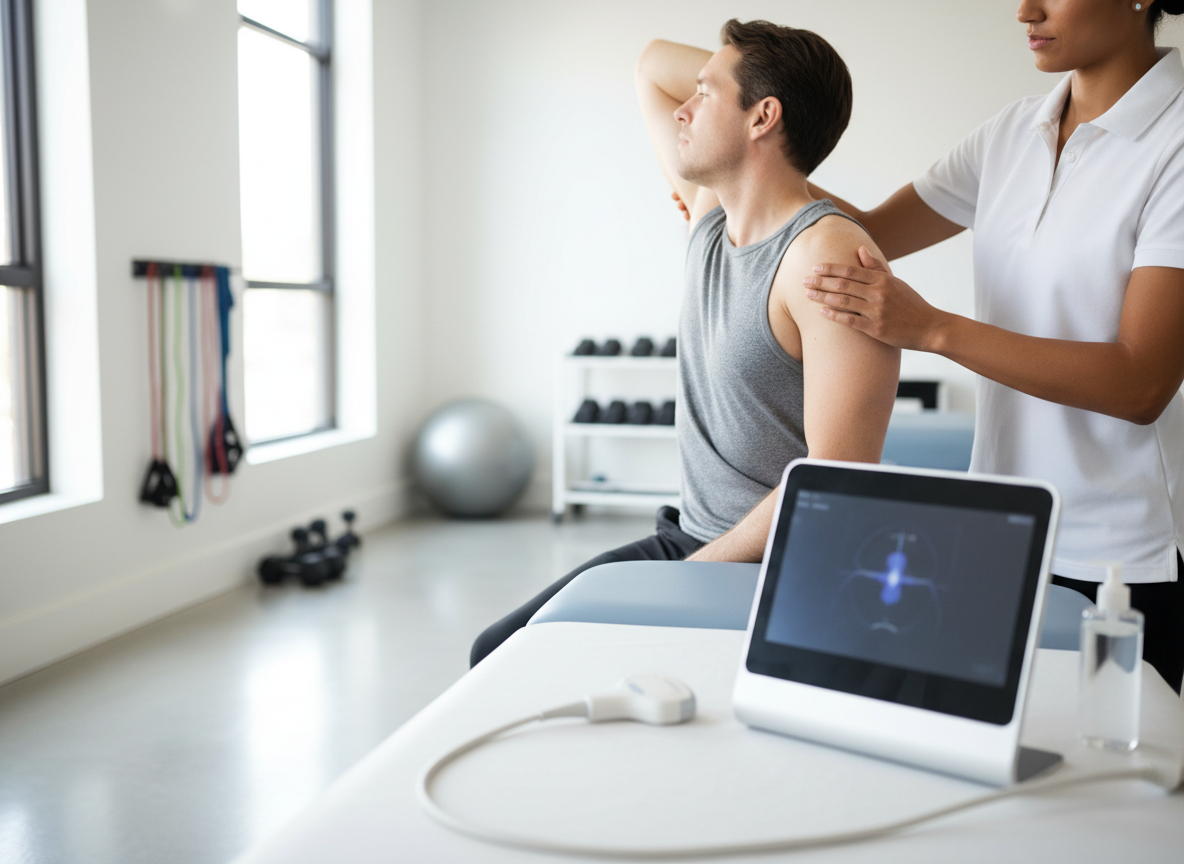
Regenerative Medicine
Regenerative Medicine: What the Evidence Says
An evidence-based look at therapies designed to support the body’s own repair processes — what current research supports, where the science is still emerging, and how these approaches fit into musculoskeletal care.
i
Disclaimer: This content is for educational purposes only and does not constitute medical advice. Consult a qualified healthcare provider before making any decisions about your care.
The Foundation
What Is Regenerative Medicine?
Regenerative medicine is a field focused on helping the body repair, replace, or support damaged tissue. Rather than only blocking pain or masking symptoms, these approaches aim to influence the biology of healing itself — using the body’s own growth factors, targeted energy, or biologic materials to encourage tissue-level repair.
In musculoskeletal care, this represents a shift from purely symptom management toward strategies that support the structure and function of tendons, joints, and other soft tissues. Reviews of orthobiologic approaches describe a growing toolkit of injectable and device-based options intended to amplify the body’s natural repair signals (Sampson S, et al. PM&R. 2016).
These therapies rarely work in isolation. The most promising results in the literature tend to appear when regenerative approaches are paired with structured rehabilitation, progressive loading, and attention to overall health (Mautner K, et al. Curr Rev Musculoskelet Med. 2019).
Explore the Modalities
Each approach carries a different evidence base and set of appropriate uses. Explore the focused guides below.
Shockwave Therapy
High-energy sound waves applied to injured tissue, with the strongest evidence in chronic lower-limb tendinopathy.
Laser Therapy (Photobiomodulation)
Red and near-infrared light studied as a supportive tool for pain and function in select tendon and joint conditions.
Platelet-Rich Plasma (PRP)
A concentrate from your own blood, studied with moderate evidence in knee osteoarthritis and certain tendinopathies.
Biologics
Cell- and tissue-based products studied for joint and disc conditions, where evidence remains mixed and largely experimental.
Emerging Therapies
Newer regenerative and longevity-focused approaches under active investigation, with evidence still evolving.
Where the Science Stands
The Evidence Landscape
The strength of evidence varies considerably across modalities. Extracorporeal shockwave therapy has some of the more consistent support in lower-limb tendinopathy, where systematic review suggests meaningful benefit for conditions such as Achilles and patellar tendon problems (Mani-Babu S, et al. Am J Sports Med. 2015;43(3):752–761).
For PRP, the picture is more nuanced. Some trials report benefit in specific indications such as patellar tendinopathy (Dragoo JL, et al. Am J Sports Med. 2014), while others find no clear superiority over comparison treatments in knee osteoarthritis (Filardo G, et al. Knee Surg Sports Traumatol Arthrosc. 2015). Results appear to depend heavily on preparation, technique, and the rehabilitation program that accompanies treatment.
Across the field, careful patient selection and realistic expectations matter as much as the therapy itself. Many biologic and emerging approaches remain investigational, and the same intervention can produce very different outcomes depending on the person and the condition.
Who May Benefit
These are areas actively studied in regenerative medicine research — framed as research contexts, not guarantees of outcome.
- Tendinopathy — chronic tendon conditions such as Achilles, patellar, and elbow problems.
- Osteoarthritis — mild to moderate joint changes, most studied in the knee.
- Spine conditions — an area of interest where research remains more limited and early.
- Sports injuries — selected ligament, muscle, and tendon injuries in active individuals.
Whether a given approach is appropriate depends on the individual, the diagnosis, and a careful evaluation with a qualified clinician.
Grounded in the Literature
Every guide on this site is built on peer-reviewed evidence and written to present both what the research supports and where it remains uncertain. We aim to be clear, honest, and free of hype.
References
Disclaimer: This content is intended for educational purposes only and does not constitute medical advice, diagnosis, or treatment. It should not replace a consultation with a qualified healthcare provider. No pharmaceutical or medication recommendations are made on this site. Readers with specific health concerns should consult a licensed clinician.
- Belk JW, Leland DP, Kingery MT, et al. Platelet-rich plasma versus alternative injections for osteoarthritis of the knee: a systematic review and meta-analysis of randomized controlled trials. Am J Sports Med. 2024;52(4):1097–1107. doi:10.1177/03635465231224463
- Sampson S, Gerhardt M, Mandelbaum B. Platelet rich plasma injection grafts for musculoskeletal injuries: a review. Curr Rev Musculoskelet Med. 2008;1(3–4):165–174. PMID:19468908
- Mautner K, Colberg RE, Malanga G, et al. Outcomes after ultrasound-guided platelet-rich plasma injections for chronic tendinopathy: a multicenter, retrospective review. PM R. 2013;5(3):169–175. PMID:23531349
- Dai WL, Zhou AG, Zhang H, Zhang J. Efficacy of platelet-rich plasma in the treatment of knee osteoarthritis: a meta-analysis of randomized controlled trials. Arthroscopy. 2017;33(3):659–670. PMID:27720536
- Dragoo JL, Wasterlain AS, Braun HJ, Nead KT. Platelet-rich plasma as a treatment for patellar tendinopathy: a double-blind, randomized controlled trial. Am J Sports Med. 2014;42(3):610–618. PMID:24481828
- Filardo G, Di Matteo B, Di Martino A, et al. Platelet-rich plasma intra-articular knee injections show no superiority versus viscosupplementation: a randomized controlled trial. Am J Sports Med. 2015;43(7):1575–1582. PMID:25952834
- Fitzpatrick J, Bulsara MK, McCrory PR, Richardson MD, Zheng MH. Analysis of platelet-rich plasma extraction: variations in platelet and blood components between 4 commercial kits. Orthop J Sports Med. 2017;5(1):2325967116675272. PMID:28210665
- Arirachakaran A, Sukthuayat A, Sisayanarane T, et al. Platelet-rich plasma versus conventional treatment in chronic lateral epicondylitis: systematic review and network meta-analysis. J Orthop Traumatol. 2016;17(2):101–112. PMID:26531063
- Mani-Babu S, Morrissey D, Waugh C, Screen H, Barton C. The effectiveness of extracorporeal shock wave therapy in lower limb tendinopathy: a systematic review. Am J Sports Med. 2015;43(3):752–761. PMID:24753238
- Li S, Xiao Z, Ge M. The effectiveness of shockwave therapy on patellar tendinopathy, Achilles tendinopathy, and plantar fasciitis: a systematic review and meta-analysis. Front Physiol. 2023;14:1193835. doi:10.3389/fphys.2023.1193835
- Leal C, Ramon S, Furia J, et al. Current concepts of shockwave therapy in chronic calcific tendinopathy. Int J Surg. 2015;24(Pt B):188–193. PMID:26307394
- Hamblin MR. Mechanisms and mitochondrial redox signaling in photobiomodulation. Photochem Photobiol. 2018;94(2):199–212. PMID:29164625
- Alves AN, Fernandes KPS, Deana AM, Bussadori SK, Mesquita-Ferrari RA. Effects of low-level laser therapy on skeletal muscle repair: a systematic review. Am J Phys Med Rehabil. 2014;93(12):1073–1085. PMID:24879328
- Cheng K, Martin LF, Slepian MJ, Chu Y, Bhatt DL. Mechanisms and pathways of pain photobiomodulation: a narrative review. J Pain. 2021;22(7):763–777. PMID:33540082
- López-de-Celis C, Barra-López ME, González-Rueda V, Bueno-Gracia E, Pérez-Bellmunt A. Effectiveness of photobiomodulation therapy in musculoskeletal disorders: a systematic review. Photobiomodul Photomed Laser Surg. 2020;38(11):667–673. PMID:33016818
- Pas HIMFL, Moen MH, Haisma HJ, Winters M. No evidence for the use of stem cell therapy for tendon disorders: a systematic review. Br J Sports Med. 2017;51(13):996–1002. PMID:28087567
- Caplan AI. Mesenchymal stem cells: time to change the name! Stem Cells Transl Med. 2017;6(6):1445–1451. PMID:28452204
- Rodríguez-Merchan EC. Evidence-based conservative treatment of osteoarthritis. Arch Bone Jt Surg. 2022;10(3):194–203. doi:10.22038/abjs.2021.57700.2847
- López-Otín C, Blasco MA, Partridge L, Serrano M, Kroemer G. The hallmarks of aging. Cell. 2013;153(6):1194–1217. PMID:23746838
- Irwin MR. Sleep and inflammation: partners in sickness and in health. Nat Rev Immunol. 2019;19(11):702–715. PMID:31289370
- Xie L, Kang H, Xu Q, et al. Sleep drives metabolite clearance from the adult brain. Science. 2013;342(6156):373–377. PMID:24136970
- Longo VD, Mattson MP. Fasting: molecular mechanisms and clinical applications. Cell Metab. 2014;19(2):181–192. PMID:24440038
- Buettner D, Skemp S. Blue zones: lessons from the world’s longest lived. Am J Lifestyle Med. 2016;10(5):318–321. PMID:30202288
- Booth FW, Roberts CK, Laye MJ. Lack of exercise is a major cause of chronic diseases. Compr Physiol. 2012;2(2):1143–1211. PMID:23798298
- Calder PC. Omega-3 fatty acids and inflammatory processes: from molecules to man. Biochem Soc Trans. 2017;45(5):1105–1115. PMID:28900017
- Shaw G, Lee-Barthel A, Ross ML, Wang B, Baar K. Vitamin C–enriched gelatin supplementation before intermittent activity augments collagen synthesis. Am J Clin Nutr. 2017;105(1):136–143. PMID:27852613
- Walker MP. Why We Sleep: Unlocking the Power of Sleep and Dreams. New York: Scribner; 2017.
- Attia P. Outlive: The Science and Art of Longevity. New York: Harmony Books; 2023.
- Sinclair DA, LaPlante MD. Lifespan: Why We Age — and Why We Don’t Have To. New York: Atria Books; 2019.
- Sampson S, Gerhardt M, Mandelbaum B. Platelet rich plasma injection grafts for musculoskeletal injuries: a review. Curr Rev Musculoskelet Med. 2008;1(3–4):165–174. PMID:19468908
- Mautner K, Colberg RE, Malanga G, et al. Outcomes after ultrasound-guided platelet-rich plasma injections for chronic tendinopathy: a multicenter, retrospective review. PM R. 2013;5(3):169–175. PMID:23531349
- Bonafede M, Ackerman SJ, Lozano-Calderon S, et al. Healthcare resource use and costs associated with platelet-rich plasma injections for osteoarthritis in a US health plan. J Med Econ. 2021;24(1):596–604. doi:10.1080/13696998.2021.1918867
- Zhu Y, Yuan M, Meng HY, et al. Basic science and clinical application of platelet-rich plasma for cartilage defects and osteoarthritis: a review. Osteoarthritis Cartilage. 2013;21(11):1627–1637. PMID:23933379
- Speed C. A systematic review of shockwave therapies in soft tissue conditions: focusing on the evidence. Br J Sports Med. 2014;48(21):1538–1542. PMID:24125806
- Notarnicola A, Moretti B. The biological effects of extracorporeal shock wave therapy (ESWT) on tendon tissue. Muscles Ligaments Tendons J. 2012;2(1):33–37. PMID:23738277
- de Oliveira MF, Johnson DS, Demchak T, Tomazoni SS, Leal-Junior EC. Low-intensity LASER and LED (photobiomodulation therapy) for pain control of the most common musculoskeletal conditions. Eur J Phys Rehabil Med. 2022;58(2):282–289. PMID:34761900
- Ferraresi C, Huang YY, Hamblin MR. Photobiomodulation in human muscle tissue: an advantage in sports performance? J Biophotonics. 2016;9(11–12):1273–1299. PMID:27874264
- Murata N, Miyamoto A, Takashima H, et al. The relationship between intervertebral disc degeneration and aging. J Orthop Sci. 2021;26(6):957–963. doi:10.1016/j.jos.2020.09.004
- Noriega DC, Ardura F, Hernández-Ramajo R, et al. Intervertebral disc repair by allogeneic mesenchymal bone marrow cells: a randomized controlled trial. Transplantation. 2017;101(8):1945–1951. PMID:27661661
- Kennedy BK, Berger SL, Brunet A, et al. Geroscience: linking aging to chronic disease. Cell. 2014;159(4):709–713. PMID:25417146
- Baar K. Minimizing injury and maximizing return to play: lessons from engineered ligaments. Sports Med. 2017;47(Suppl 1):5–11. PMID:28332116
- Longo UG, Loppini M, Berton A, Maffulli N, Denaro V. Tissue engineered strategies for skeletal muscle injury. Stem Cells Int. 2012;2012:175038. PMID:22550521
- Verma P, Dalal K. Serum cartilage oligomeric matrix protein (COMP) in knee osteoarthritis: a novel diagnostic and prognostic biomarker. J Orthop Res. 2013;31(7):999–1006. PMID:23423991
- Franceschi C, Garagnani P, Parini P, Giuliani C, Santoro A. Inflammaging: a new immune-metabolic viewpoint for age-related diseases. Nat Rev Endocrinol. 2018;14(10):576–590. PMID:30046148
- Furman D, Campisi J, Verdin E, et al. Chronic inflammation in the etiology of disease across the life span. Nat Med. 2019;25(12):1822–1832. PMID:31806905
- Liguori I, Russo G, Curcio F, et al. Oxidative stress, aging, and diseases. Clin Interv Aging. 2018;13:757–772. PMID:29731617
- Rebelo-Marques A, De Sousa Lages A, Andrade R, et al. Aging hallmarks: the benefits of physical exercise. Front Endocrinol (Lausanne). 2018;9:258. PMID:29887842
- Morton RW, Murphy KT, McKellar SR, et al. A systematic review, meta-analysis and meta-regression of the effect of protein supplementation on resistance training-induced gains in muscle mass and strength in healthy adults. Br J Sports Med. 2018;52(6):376–384. PMID:28698222
- Stokes T, Hector AJ, Morton RW, McGlory C, Phillips SM. Recent perspectives regarding the role of dietary protein for the promotion of muscle hypertrophy with resistance exercise training. Nutrients. 2018;10(2):180. PMID:29414855
- Tipton KD. Efficacy and consequences of very-high-protein diets for athletes and exercisers. Proc Nutr Soc. 2011;70(2):205–214. PMID:21256825
- Kouzaki K, Kimura M, Ichihashi N. Oral collagen peptide supplementation plus resistance exercise improves muscle strength parameters. Med Sci Sports Exerc. 2021;53(8):1685–1693. PMID:34060524
- Ekelund U, Tarp J, Steene-Johannessen J, et al. Dose-response associations between accelerometry measured physical activity and sedentary time and all cause mortality: systematic review and harmonised meta-analysis. BMJ. 2019;366:l4570. PMID:31434697
- Pedersen BK, Saltin B. Exercise as medicine — evidence for prescribing exercise as therapy in 26 different chronic diseases. Scand J Med Sci Sports. 2015;25(Suppl 3):1–72. PMID:26606383
- Schoenfeld BJ, Grgic J, Ogborn D, Krieger JW. Strength and hypertrophy adaptations between low- vs. high-load resistance training: a systematic review and meta-analysis. J Strength Cond Res. 2017;31(12):3508–3523. PMID:28834797
- Vlaeyen JWS, Maher CG, Wiech K, et al. Low back pain. Nat Rev Dis Primers. 2018;4(1):52. PMID:30464163
- Foster NE, Anema JR, Cherkin D, et al. Prevention and treatment of low back pain: evidence, challenges, and promising directions. Lancet. 2018;391(10137):2368–2383. PMID:29573872
- Chou R, Qaseem A, Snow V, et al. Diagnosis and treatment of low back pain: a joint clinical practice guideline from the American College of Physicians and the American Pain Society. Ann Intern Med. 2007;147(7):478–491. PMID:17909209
- van Middelkoop M, Rubinstein SM, Verhagen AP, Ostelo RW, Koes BW, van Tulder MW. Exercise therapy for chronic nonspecific low-back pain. Best Pract Res Clin Rheumatol. 2010;24(2):193–204. PMID:20227644
 Dr. Austin Fontenot