⚠️ Disclaimer: The information on this page is intended for general educational purposes only and does not constitute medical advice. It is not a substitute for professional medical diagnosis, treatment, or guidance. Always consult a qualified healthcare provider before beginning any exercise or rehabilitation program.
Knee Pain
Evidence-based guidance on knee pain, injury patterns, and rehab so you can move confidently again.
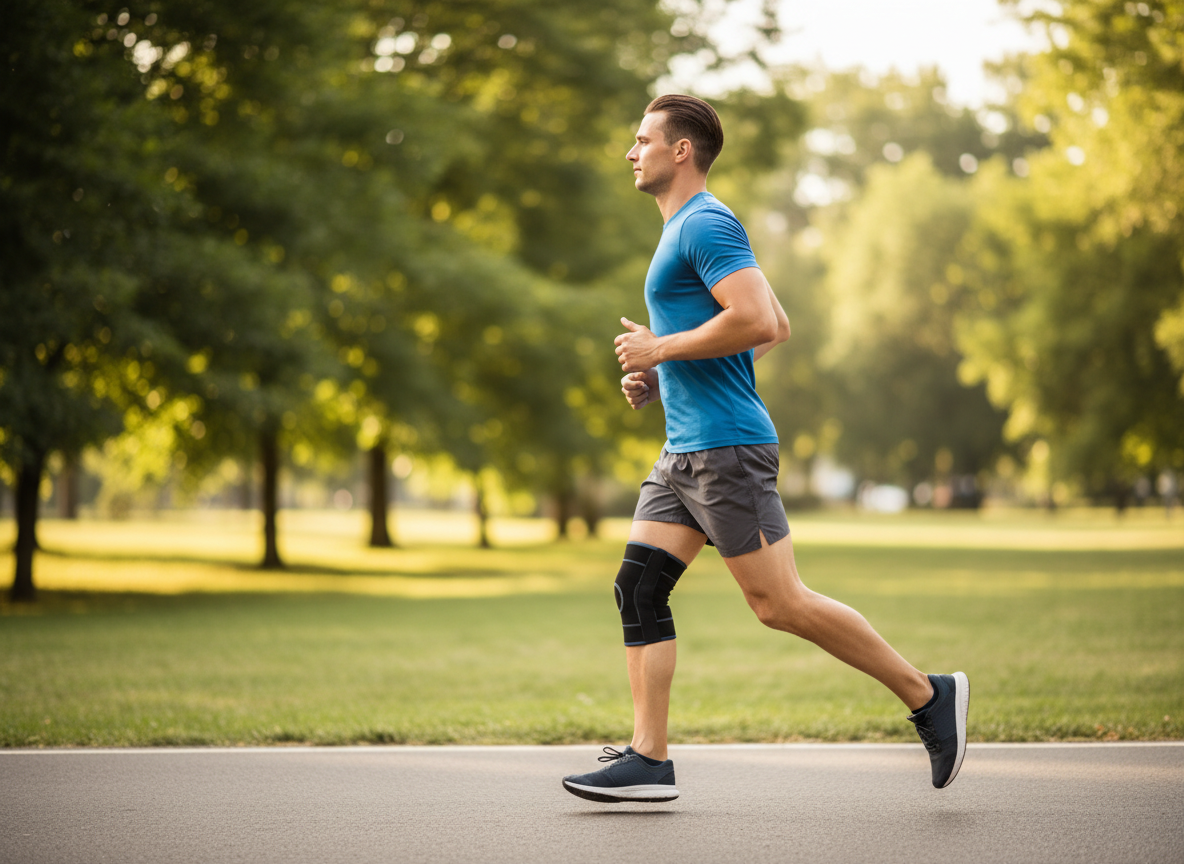
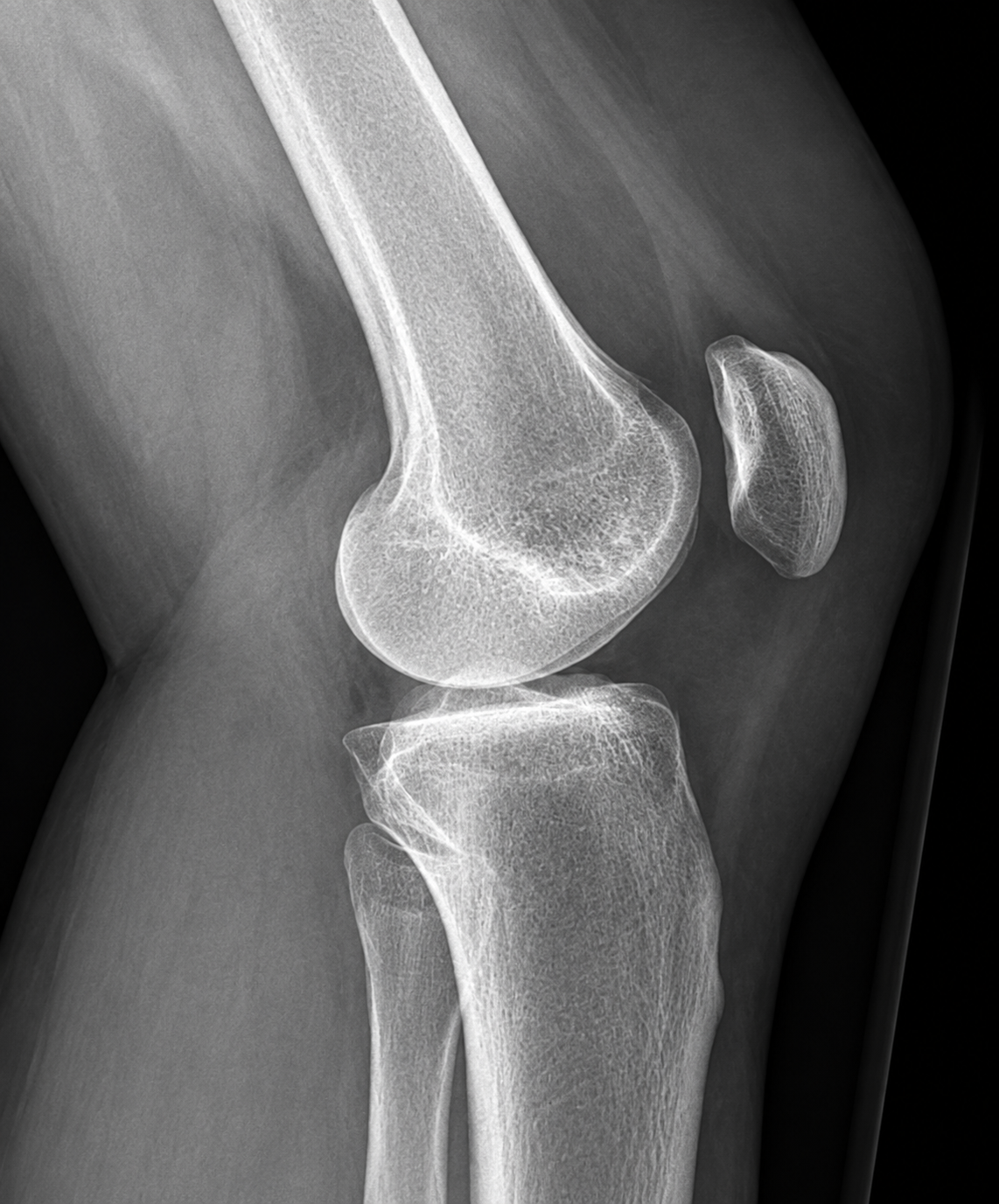
Knee Conditions and Rehab Overview
Learn how common knee problems—arthritis, sprains, ligament tears, meniscus injuries, and patellofemoral pain—are diagnosed and treated, what realistic recovery timelines look like, and how exercise-based rehabilitation supports long-term strength, mobility, and return to activity.
Understanding Knee Anatomy and Why It Matters
The knee is the largest joint in the body and one of the most mechanically complex. It comprises the tibiofemoral joint (where the femur meets the tibia), the patellofemoral joint (where the kneecap meets the femur), medial and lateral menisci, four primary ligaments (ACL, PCL, MCL, LCL), the quadriceps and hamstrings muscle groups, the patellar tendon, the iliotibial (IT) band, and several bursae. Each structure plays a distinct role in load distribution, shock absorption, and movement control.
Understanding anatomy matters because different structures heal differently. Tendons and cartilage are relatively avascular and adapt slowly to load. Ligaments recover along a spectrum — some heal without surgery, others do not. Bone and muscle respond more readily to progressive loading. Rehabilitation protocols that ignore these distinctions tend to either under-load or overload the healing tissue. (Dye SF. The pathophysiology of patellofemoral pain. Clin Orthop Relat Res. 2005.)
Common Knee Conditions
Patellofemoral Pain Syndrome (PFPS)
PFPS is the most common cause of anterior knee pain in physically active adults, characterized by pain around or behind the kneecap during loading activities such as squatting, running, and stair climbing. Contributing factors include altered patellar tracking, quadriceps and hip abductor weakness, and excessive training loads. Conservative management — particularly hip and quad strengthening — is highly effective. (Crossley KM et al. Patellofemoral pain. Br J Sports Med. 2016.)
ACL Injuries
ACL tears are among the most studied sports injuries, typically occurring via non-contact mechanisms during cutting, pivoting, or landing. The decision between conservative and surgical management depends on activity level, degree of instability, and the presence of coexisting meniscal or cartilage injuries. Evidence from the KANON trial demonstrated that structured rehabilitation alone produces comparable outcomes to early reconstruction for many patients. (Frobell RB et al. NEJM. 2010; Monk AP et al. Br J Sports Med. 2016.)
Meniscus Tears
Meniscal tears are broadly categorized as traumatic (usually in younger, active individuals) or degenerative (more common with aging). For degenerative tears, high-quality evidence now supports exercise therapy as the primary treatment — multiple randomized controlled trials have found it equivalent to arthroscopic partial meniscectomy in outcomes including pain and function. (Kise NJ et al. BMJ. 2016; Sihvonen R et al. FIDELITY trial. NEJM. 2013.)
Knee Osteoarthritis
Knee OA is the most prevalent musculoskeletal condition globally, affecting an estimated 250 million people. Exercise is first-line treatment across all major international guidelines — not because it treats the structural changes, but because it improves pain, function, and quality of life through muscular support, synovial health, and central sensitization modulation. (Bannuru RR et al. OARSI guidelines. Osteoarthritis Cartilage. 2019; Fransen M et al. Lancet. 2015.)
IT Band Syndrome
Iliotibial band syndrome (ITBS) is the most common cause of lateral knee pain in runners. Contrary to older models emphasizing friction, current biomechanical evidence points to compressive loading of fat tissue beneath the IT band at approximately 30° of knee flexion. Hip abductor weakness, running mechanics, and rapid training load increases are primary contributing factors. (Fairclough J et al. J Biomech. 2006.)
Patellar Tendinopathy
Patellar tendinopathy — characterized by localized infrapatellar pain and load-related dysfunction — follows the reactive-degenerative tendon continuum model. Early reactive presentations respond well to load reduction and isometric exercises. Established tendinopathy responds to progressive heavy loading, particularly heavy slow resistance (HSR) training. Stretching and passive modalities are generally ineffective in isolation. (Cook JL, Purdam CR. Br J Sports Med. 2009; Rio E et al. Br J Sports Med. 2015.)
Pes Anserine Bursitis
Pes anserine bursitis involves inflammation of the bursa located medially at the proximal tibia, where the sartorius, gracilis, and semitendinosus tendons insert. It presents as medial knee pain below the joint line and is frequently associated with knee osteoarthritis and hamstring tightness. Management focuses on activity modification, hamstring stretching, and addressing contributing biomechanical factors.
Plica Syndrome
Plica syndrome results from irritation of a synovial fold (plica) in the knee — a vestigial remnant of embryological tissue compartments. Symptoms mimic meniscal pathology, including medial or anterior knee pain with clicking and discomfort during repetitive flexion-extension. Conservative management with activity modification and quadriceps strengthening resolves most cases.
Injury Patterns and Risk Factors
Recognizing injury patterns is as important as identifying the specific diagnosis. Most knee injuries fall into two broad categories: traumatic (sudden onset from a specific mechanism) and overuse (gradual accumulation of load beyond tissue tolerance).
Traumatic Patterns
Non-contact ACL tears are most common in cutting and pivoting sports such as soccer, basketball, and skiing. Landing mechanics — particularly dynamic knee valgus combined with reduced hip and knee flexion — are the dominant modifiable risk factors. Females sustain ACL injuries at 2–8 times the rate of males, driven by anatomical, hormonal, and neuromuscular differences. (Hewett TE et al. Am J Sports Med. 2005; Prodromos CC et al. Arthroscopy. 2007.)
Overuse Patterns
PFPS, patellar tendinopathy, and ITBS share a common mechanism: too much load applied too quickly. Training errors — rapid volume increases, insufficient recovery, abrupt changes in surface or footwear — are consistently identified as primary risk factors. Addressing training load management is often more impactful than any specific exercise intervention.
Age and Lifestyle Factors
Degenerative conditions — knee OA and degenerative meniscal tears — increase in prevalence with age, elevated BMI, and prior joint injury. Importantly, load history and physical activity levels remain modifiable. Evidence consistently shows that physically active individuals have better long-term knee outcomes than sedentary ones, even in the presence of structural degeneration.
Evidence-Based Rehabilitation Principles
Regardless of diagnosis, a small set of principles underlies effective knee rehabilitation.
Load Management
Tissue must be loaded enough to stimulate adaptation — but not beyond its current tolerance. The ‘envelope of function’ concept describes the safe zone of loading for any given tissue at any given time. Rehabilitation progresses by systematically expanding that envelope. (Dye SF. Clin Orthop Relat Res. 2005.)
Quadriceps Strength
Quadriceps weakness is both a cause and a consequence of most knee conditions. Even modest deficits — as little as 20% asymmetry — are associated with worse pain, function, and long-term outcomes in OA and post-ACL populations. Restoring quad strength is a non-negotiable rehabilitation goal. (Slemenda C et al. Ann Intern Med. 1997.)
Hip and Gluteal Strength
Proximal control significantly influences knee mechanics. Hip abductor and external rotator weakness allows for increased dynamic knee valgus and elevated patellofemoral contact pressures. Hip-targeted training is now a standard component of PFPS, ITBS, and ACL rehabilitation protocols. (Ferber R et al. J Athl Train. 2015.)
Neuromuscular Training
Joint position sense, dynamic balance, and reactive muscle activation are often impaired following knee injury. Neuromuscular training — including perturbation training, balance work, and sport-specific movement drills — restores these capacities and reduces re-injury risk. (Risberg MA et al. Am J Sports Med. 2007.)
Pain as a Guide
Pain during rehabilitation is not inherently harmful, but it requires context. A common clinical guideline: pain at or below 3/10 during exercise is generally acceptable and should not persist more than 24 hours afterward. Pain consistently above this threshold, or pain that accumulates over days, indicates excessive loading.
Return to Activity: Criteria-Based Progression
Time-based return to activity — waiting a set number of weeks before resuming sport — is increasingly recognized as insufficient. Criteria-based return, where readiness is assessed against objective functional benchmarks, produces meaningfully better outcomes and lower re-injury rates. (Grindem H et al. Br J Sports Med. 2016.)
Key Return Criteria
- Pain ≤3/10 during all functional tasks, with no post-exercise flare lasting more than 24 hours
- Quadriceps strength symmetry ≥90% compared to the uninvolved limb (measured by dynamometry or hop testing)
- Single-leg hop test performance ≥90% limb symmetry index (LSI)
- Absence of joint effusion at rest and after activity
- Psychological readiness — assessed with validated tools such as the ACL-RSI (Webster KE et al. Am J Sports Med. 2018)
Athletes who meet strength symmetry criteria before returning to sport have significantly lower re-injury rates than those who return on time alone. For ACL specifically, returning before achieving ≥90% quad symmetry approximately doubles re-injury risk. (Grindem H et al. Br J Sports Med. 2016.)
When to Seek Further Evaluation
Most knee pain responds well to structured rehabilitation without advanced imaging or intervention. However, certain presentations warrant prompt clinical evaluation.
Red Flags
- Significant swelling developing within hours of a traumatic injury
- Mechanical symptoms: locking, giving way, or inability to fully extend the knee
- Inability to bear weight following trauma
- Progressive pain at night unrelated to activity
- Unexplained weight loss alongside joint pain or swelling
Imaging Considerations
Structural findings on MRI frequently do not correlate with symptoms — particularly in degenerative conditions. Meniscal degeneration, cartilage thinning, and minor ligamentous changes are common incidental findings in asymptomatic adults. Ordering imaging too early risks anchoring clinical decisions to structural findings that may be clinically irrelevant. A thorough clinical assessment — history, movement evaluation, functional testing — is usually the more informative starting point.
When imaging does add value: acute traumatic presentations with suspected fracture, locked knees, or cases where clinical examination is inconclusive and the diagnosis would meaningfully change management.
References & Sources
- Lauersen JB, et al. The effectiveness of exercise interventions to prevent sports injuries. Br J Sports Med. 2014;48(11):871–877.
- Collins NJ, et al. Patellofemoral pain syndrome. Nat Rev Dis Primers. 2016;2:16074.
- Grindem H, et al. Simple decision rules can reduce reinjury risk by 84% after ACL reconstruction. Br J Sports Med. 2016;50(13):804–808.
- Monk AP, et al. Surgical versus conservative interventions for treating meniscal tears of the knee in adults. Cochrane Database Syst Rev. 2017;(6):CD011696.
- Bannuru RR, et al. OARSI guidelines for the non-surgical management of knee, hip, and polyarticular osteoarthritis. Osteoarthritis Cartilage. 2019;27(11):1578–1589.
- Lavine R. Iliotibial band friction syndrome. Curr Rev Musculoskelet Med. 2010;3(1–4):18–22.
- Lian ØB, et al. Prevalence of jumper’s knee among elite athletes from different sports. Am J Sports Med. 2005;33(4):561–567.
- Kongsgaard M, et al. Corticosteroid injections, eccentric decline squat training and heavy slow resistance training in patellar tendinopathy. Scand J Med Sci Sports. 2009;19(6):790–802.
- Crossley KM, et al. 2016 Patellofemoral pain consensus statement. Br J Sports Med. 2016;50(14):839–843.
- Ardern CL, et al. 2016 Consensus statement on return to sport. Br J Sports Med. 2016;50(14):853–864.
- Stensrud S, et al. Prevalence of abnormal MRI findings in asymptomatic knees. Osteoarthritis Cartilage. 2012;20(Suppl 1):S54.
- Moseley GL. A pain neuromatrix approach to patients with chronic pain. Man Ther. 2003;8(3):130–140.
 Dr. Austin Fontenot