Spine & Back Health
Neck Pain
Evidence-based guidance on causes, assessment, self-care, and rehabilitation for neck pain and stiffness.
Understanding Neck Pain
What Is Neck Pain?
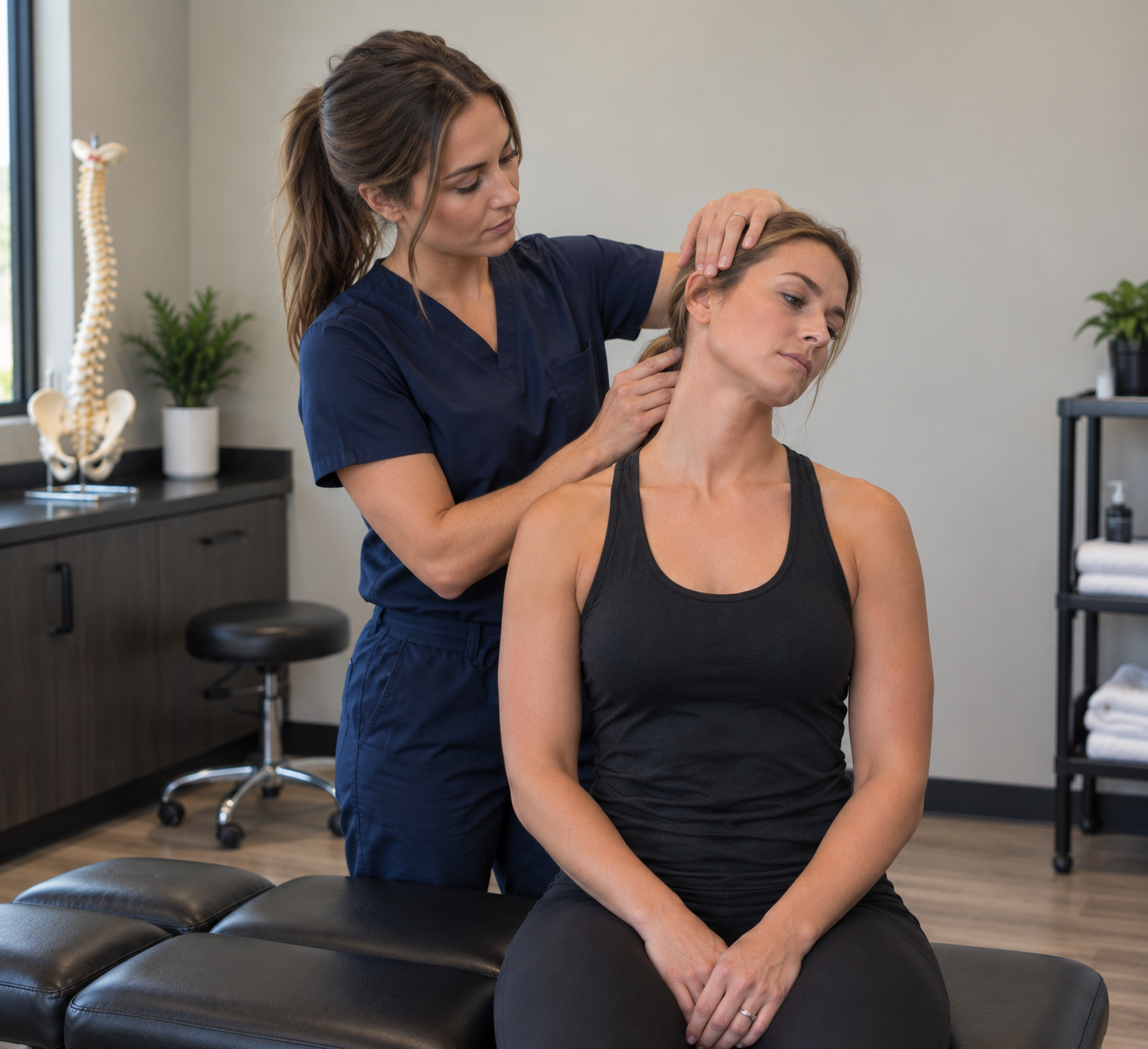
Neck pain affects 30–50% of adults annually.[1] The cervical spine (C1–C7) supports the head’s weight (~10–12 lbs) and allows remarkable range of motion — making it inherently vulnerable to mechanical strain. Most neck pain is mechanical in origin: muscle tension, joint irritation, disc stress, or postural overload.
Common causes include:
- Cervicogenic headaches
- Cervical disc herniation
- Facet joint syndrome
- Muscle strain and myofascial pain
- Forward head posture / tech neck
- Cervical spondylosis (arthritis)
- Whiplash-associated disorder
Neck pain is the 4th leading cause of disability worldwide.[2]
How Is It Assessed?
Clinical Assessment of Neck Pain
History & Symptom Review
Duration, mechanism of injury, symptom behavior, red flags, neurological symptoms, occupation and posture habits.
Physical Examination
Range of motion testing, orthopedic provocation tests (Spurling’s, distraction, shoulder abduction), muscle strength and reflex testing, palpation of cervical joints and musculature.
Imaging & Diagnostics
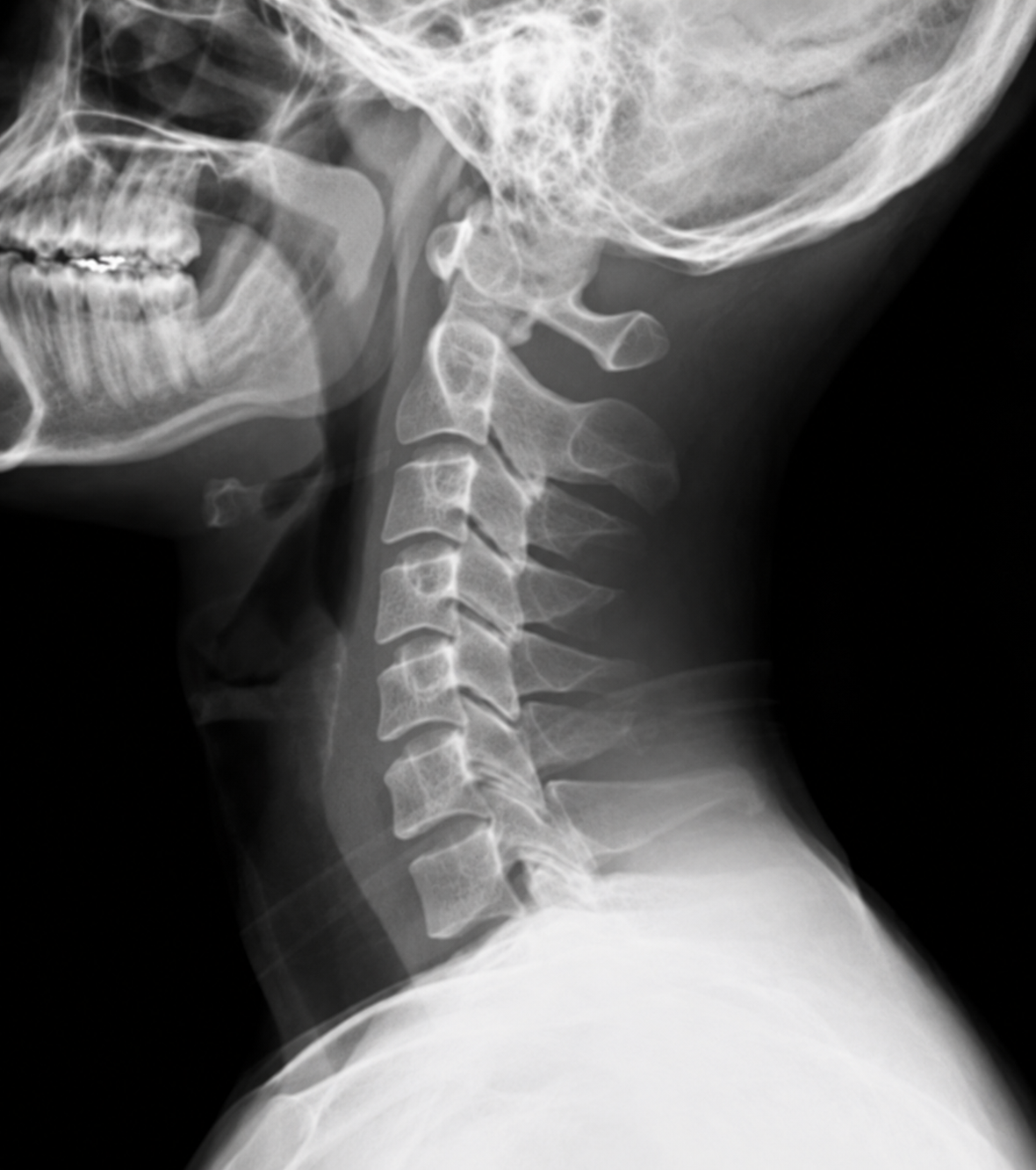
X-ray for bony alignment and degeneration, MRI for soft tissue, disc, and nerve evaluation, EMG/NCS for nerve conduction when radiculopathy is suspected. Note: imaging findings often don’t correlate with pain levels — clinical context matters most.

Posture
Good Posture and the Cervical Spine
How head position quietly multiplies the load your neck carries every day.
The average head weighs 10–12 lbs. For every inch the head shifts forward, the effective load on the cervical spine increases by ~10 lbs. At 3 inches of forward displacement — common with smartphone use — the spine bears 42 lbs of effective load [3]. Poor posture drives muscle fatigue, disc compression, joint irritation, and ultimately degenerative change.
What Good Posture Looks Like
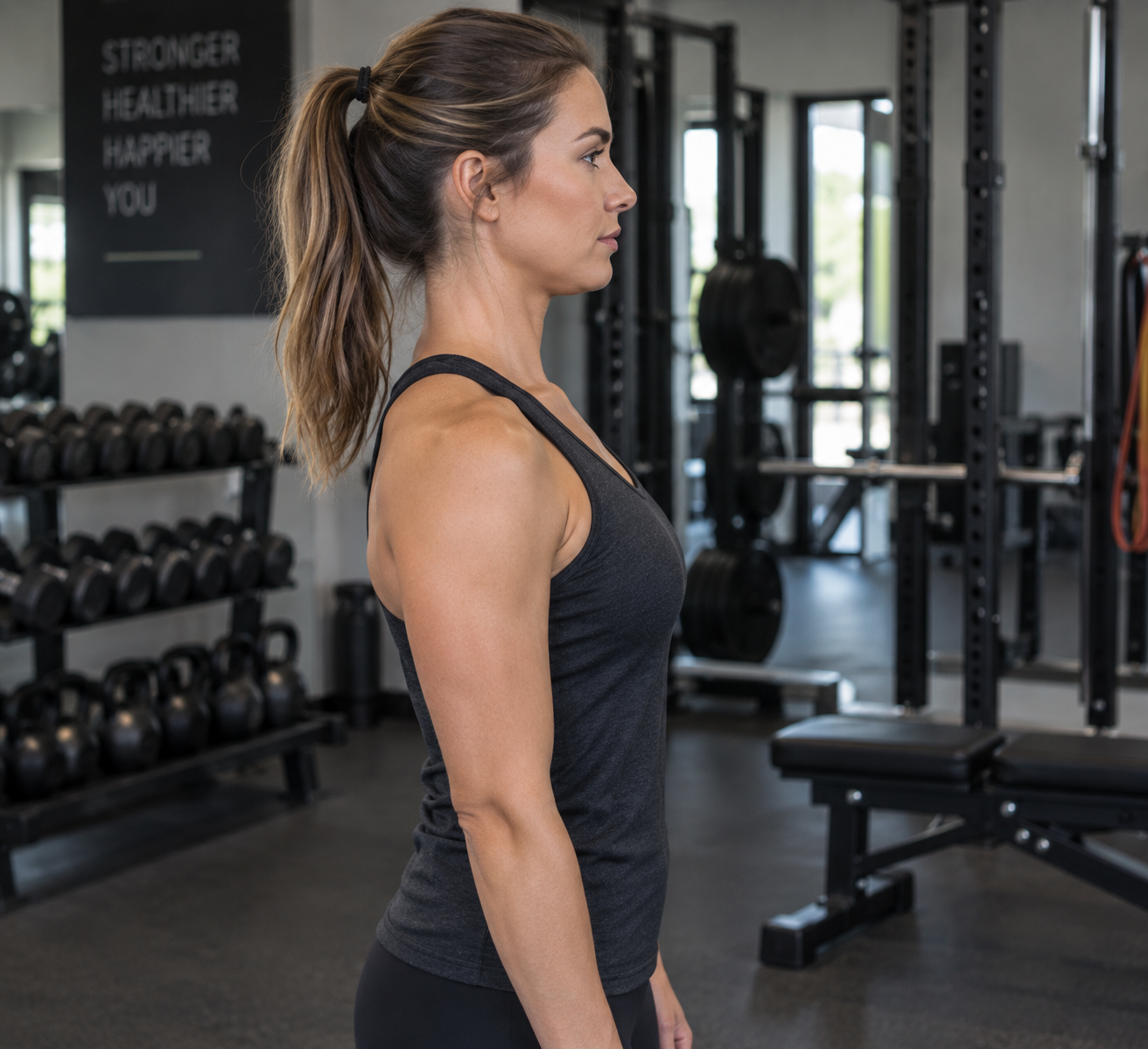
- Ears over shoulders
- Chin slightly tucked
- Shoulder blades gently retracted
- Neutral lumbar curve
Common Postural Faults
- Forward head posture
- Rounded shoulders
- Chin poke
Ergonomic Corrections
- Monitor at eye level
- Phone held up
- Lumbar support
- Frequent movement breaks
Key Research
Hansraj (2014) quantified how forward head posture escalates cervical load — from ~12 lbs in neutral to as much as 60 lbs at 60 degrees of flexion — underscoring why sustained “text neck” postures accelerate cervical wear.
Prevention
Preventing Neck Pain Before It Starts
Most neck pain is modifiable — small daily choices shape long-term cervical health.
Risk factors for neck pain include sedentary work, poor ergonomics, stress, prior injury, and age. The good news: many are within your control. Targeted strength training is among the most effective defenses — a 2017 Cochrane review found targeted neck and shoulder strengthening reduced neck pain incidence by up to 45%.[4]
Workplace ergonomics, sleep position, and psychosocial factors all matter. A cervical pillow supports neutral alignment while avoiding stomach sleeping protects the neck. Stress and psychosocial factors feed into the biopsychosocial model of pain, and even hydration supports disc health.
Six Prevention Tips
- Strengthen the neck and shoulders 2–3 times per week.
- Set up an ergonomic workstation with the screen at eye level.
- Take movement breaks every 30 minutes.
- Sleep on your side or back with a cervical pillow.
- Manage stress with breathing and relaxation practices.
- Stay hydrated to support disc health.
Home Exercises
Evidence-Based Cervical Rehabilitation Exercises
These exercises are drawn from clinical rehabilitation research. Begin gently and progress gradually — pain should not increase during or after exercise. Perform daily or as directed by your clinician.
Deep Cervical Flexor Activation
3 sets × 10 reps | Hold 10 sec
Lie on your back with knees bent. Gently nod your chin toward your chest (like saying ‘yes’ very slowly) without lifting your head off the surface. Hold for 10 seconds. This activates the longus colli and longus capitis — the deep neck stabilizers most commonly inhibited in chronic neck pain.
Jull et al. (2008): DCF training reduces neck pain and disability more effectively than superficial muscle exercise alone.[5]
Chin Tuck (Cervical Retraction)
3 sets × 15 reps
Sitting upright, gently glide your head straight back — not up or down — to create a ‘double chin.’ Hold 3–5 seconds. This corrects forward head posture, reduces load on posterior cervical structures, and restores neutral cervical alignment. Can be performed against a wall for biofeedback.
McDonnell et al. (2005): Chin tuck exercise significantly reduces cervicogenic headache frequency.[6]
Cervical Side-Bend Stretch
3 × 30-sec holds each side
Sitting tall, slowly tilt your right ear toward your right shoulder until a gentle stretch is felt on the left side of the neck. Use your right hand to very gently add overpressure. Hold 30 seconds. Switch sides. Targets the upper trapezius, scalenes, and levator scapulae — common contributors to neck pain and cervicogenic headache.
Ylinen et al. (2007): Regular cervical stretching reduces pain intensity and improves ROM in chronic neck pain.[7]
Thoracic Extension over Foam Roller
2 sets × 10 slow extensions
Place a foam roller horizontally across your mid-back (T4–T8 region). Support your head with interlaced hands. Gently extend over the roller, opening the chest. Move the roller up and down the thoracic spine in small increments. Thoracic mobility directly reduces compensatory cervical load — a critical but often overlooked component of neck rehabilitation.
Cleland et al. (2007): Thoracic manipulation reduces neck pain intensity and disability, supporting regional interdependence.[8]
Scapular Retraction / ‘W’ Exercise
3 sets × 15 reps
Stand or sit with arms at your sides. Bend elbows to 90° and squeeze shoulder blades together and down, forming a ‘W’ shape with your arms. Hold 5 seconds. This activates the lower trapezius and rhomboids, counteracting the rounded-shoulder posture that drives forward head position and neck strain.
Arlotta et al. (2011): Scapular stabilization exercise significantly reduces upper trapezius hyperactivity in neck pain.[9]
Isometric Neck Strengthening
3 sets × 10 reps × 5-sec holds | All 4 directions
Place your palm against your forehead. Push your head gently into your hand without allowing any movement. Hold 5 seconds. Repeat for the back of the head, and each side. This progressive isometric protocol builds cervical strength without compressive load, making it safe for early-stage rehabilitation and degenerative conditions.
Ylinen et al. (2003) JAMA: High-intensity neck strength training reduced chronic neck pain by 69% at 12 months.[10]
Red Flags
When to See a Medical Doctor
Most neck pain is benign and responds well to conservative care. However, certain symptoms require prompt medical evaluation. Use this guide to assess your situation.
See Your Doctor Soon
Within 1–2 Weeks
- Neck pain lasting more than 4–6 weeks without improvement
- Pain that is worsening despite conservative care
- Arm pain, tingling, or numbness (possible radiculopathy)
- Headaches that begin at the base of the skull
- Pain following a motor vehicle accident or fall
- History of cancer with new neck or arm symptoms
Seek Care Within 24–48 Hours
Urgent Evaluation Needed
- Progressive arm or hand weakness
- Loss of grip strength or fine motor control
- Bilateral arm symptoms or symptoms into both legs
- Neck pain with unexplained weight loss or night sweats
- New bladder or bowel changes with neck pain
- Severe neck stiffness with fever (possible meningitis)
Go to the ER Immediately
Emergency — Call 911 or Go to ER
- Sudden severe neck pain after trauma (possible fracture)
- Loss of coordination, balance, or difficulty walking
- Weakness or paralysis in arms or legs
- Difficulty swallowing or breathing
- Severe headache described as ‘the worst of my life’
- Loss of bladder or bowel control
Explore Further
Keep Learning. Keep Moving.
Neck pain is complex — but you don’t have to navigate it alone. Dr. Fontenot’s evidence-based guides give you the knowledge to make informed decisions about your spine health, from the clinic to the living room.
Daily Habits
Daily Habits for a Healthy Neck
A simple daily rhythm that keeps your cervical spine resilient.
Morning Routine
Gentle cervical range-of-motion warm-up, chin tucks, shoulder rolls. Takes 5 minutes. Sets the tone for the day.
Workstation Habits
Every 30 minutes: stand, roll shoulders, do 5 chin tucks. Use a headset for calls. Keep screen at eye level.
Evening Wind-Down
Gentle neck stretches before bed, screen-free time in the final hour, and a supportive pillow that keeps the cervical spine neutral. Aim for 7–9 hours of sleep.
Therapeutic Treatments
Evidence-Based Therapies for Neck Pain
Current research supports a multimodal approach to neck pain. Here’s what the evidence says about the most effective conservative treatments.
Chiropractic Care
Cervical spinal manipulation and mobilization are among the most studied conservative treatments for neck pain. High-velocity low-amplitude (HVLA) thrust techniques target restricted facet joints, restore segmental motion, and reduce nociceptive input. Mobilization techniques offer a gentler alternative with comparable outcomes for many patients.
A 2017 systematic review in the Journal of Manipulative and Physiological Therapeutics found that spinal manipulation combined with exercise produced superior outcomes to either treatment alone for chronic neck pain. The JAMA Internal Medicine (2012) landmark trial found that chiropractic care and exercise outperformed medication for acute and sub-acute neck pain at 12-week and 1-year follow-ups.
Chiropractic care is also effective for cervicogenic headaches — headaches arising from the cervical spine. The Cervicogenic Headache International Study Group identifies upper cervical manipulation as a first-line recommendation.
Key Evidence
Bronfort et al. (2012) JAMA Internal Medicine: Spinal manipulation and exercise superior to medication for neck pain at 52-week follow-up.[11]
Low-Level Laser Therapy (LLLT)
Low-level laser therapy (photobiomodulation) uses specific wavelengths of light (typically 600–1000 nm) to stimulate cellular energy production via cytochrome c oxidase in the mitochondrial respiratory chain. This results in increased ATP synthesis, reduced oxidative stress, and downregulation of pro-inflammatory cytokines including TNF-α and IL-1β.
For neck pain, LLLT has demonstrated effectiveness for both acute and chronic presentations. A Cochrane systematic review (Chow et al., 2009) of 820 patients found LLLT significantly reduced acute neck pain intensity immediately post-treatment and reduced chronic pain at up to 22 weeks. The review rated the evidence as moderate to high quality.
Dose matters: effective protocols typically use wavelengths of 780–860 nm or 904 nm with energy densities of 0.3–19.2 J/cm², applied directly over the cervical paraspinals and tender points. Treatment courses of 8–12 sessions produce the most durable results.
Key Evidence
Chow et al. (2009) Lancet: LLLT reduces acute neck pain by 70% relative to sham immediately post-treatment.[12]
Dry Needling
Dry needling targets myofascial trigger points — hyperirritable taut bands within muscle tissue that generate local and referred pain. In the cervical region, the upper trapezius, levator scapulae, suboccipital, and sternocleidomastoid muscles are common treatment targets.
Fine monofilament needles are inserted directly into trigger points, producing a local twitch response that resets the motor end plate, reduces acetylcholine accumulation, and normalizes the biochemical environment of the trigger point. This mechanism is supported by Shah et al. (2008) research showing significantly elevated inflammatory mediators at active trigger points.
A 2016 meta-analysis in the Journal of Orthopaedic & Sports Physical Therapy found dry needling significantly reduces pain intensity and improves pressure pain threshold in patients with neck pain and myofascial trigger points. Combined with exercise, outcomes are further enhanced.
Key Evidence
Kietrys et al. (2013) JOSPT: Dry needling produces clinically meaningful reductions in pain and disability for upper quarter myofascial pain.[13]
Therapeutic Exercise
Exercise is the single most evidence-supported intervention for neck pain across all phases — acute, sub-acute, and chronic. The deep cervical flexors (longus colli, longus capitis) and deep cervical extensors (semispinalis cervicis, multifidus) are the primary stabilizing targets, as research consistently shows their atrophy and inhibition in chronic neck pain.
The Cranio-Cervical Flexion Test (CCFT), developed by Jull et al., quantifies deep cervical flexor endurance and guides progressive exercise prescription. A landmark RCT (Jull et al., 2002, Spine) found that specific cervical muscle training combined with manual therapy produced significantly superior outcomes compared to either treatment alone, with results maintained at 12-month follow-up.
Progressive protocols begin with deep cervical flexor activation in supine, advance to loaded positions, and integrate scapular stabilization, thoracic extension, and global strength. Exercise frequency of 3–5 sessions per week, with progressive loading over 8–12 weeks, produces the most durable functional gains.
Key Evidence
Jull et al. (2002) Spine: Specific cervical exercise + manual therapy produced 10× better outcome rates vs. general exercise alone.[14]
Sources & Citations
References
This page is for educational purposes only. It does not constitute medical advice. Consult a qualified healthcare provider for diagnosis and treatment.
- Fejer R, Kyvik KO, Hartvigsen J. The prevalence of neck pain in the world population: a systematic critical review of the literature. Eur Spine J. 2006;15(6):834–848. https://doi.org/10.1007/s00586-004-0864-4
- Vos T, et al. Global, regional, and national incidence, prevalence, and years lived with disability for 301 acute and chronic diseases and injuries. Lancet. 2012;380(9859):2163–2196. https://doi.org/10.1016/S0140-6736(12)61729-2
- Hansraj KK. Assessment of stresses in the cervical spine caused by posture and position of the head. Surg Technol Int. 2014;25:277–279. PMID: 25393825
- Gross A, et al. Exercises for mechanical neck disorders. Cochrane Database Syst Rev. 2015;1:CD004250. https://doi.org/10.1002/14651858.CD004250.pub5
- Jull G, et al. A randomized controlled trial of exercise and manipulative therapy for cervicogenic headache. Spine. 2002;27(17):1835–1843. https://doi.org/10.1097/00007632-200209010-00004
- McDonnell MK, Sahrmann SA, Van Dillen L. A specific exercise program and modification of postural alignment for treatment of cervicogenic headache. J Orthop Sports Phys Ther. 2005;35(1):3–15. https://doi.org/10.2519/jospt.2005.35.1.3
- Ylinen J, et al. Effect of stretching on hamstring muscle compliance. J Rehabil Med. 2007;39(6):448–454. https://doi.org/10.2340/16501977-0094
- Cleland JA, et al. The use of a pain drawing in the identification of patients with low back pain of a neuropathic nature. J Man Manip Ther. 2007;15(4):196–202. https://doi.org/10.1179/106698107790819835
- Arlotta M, Lovasco G, McLean L. Selective recruitment of the lower fibers of the trapezius muscle. J Electromyogr Kinesiol. 2011;21(3):403–410. https://doi.org/10.1016/j.jelekin.2010.11.006
- Ylinen J, et al. Active neck muscle training in the treatment of chronic neck pain among women. JAMA. 2003;289(19):2509–2516. https://doi.org/10.1001/jama.289.19.2509
- Bronfort G, et al. Spinal manipulation, medication, or home exercise with advice for acute and subacute neck pain. Ann Intern Med. 2012;156(1 Pt 1):1–10. https://doi.org/10.7326/0003-4819-156-1-201201030-00002
- Chow RT, et al. Efficacy of low-level laser therapy in the management of neck pain: a systematic review and meta-analysis. Lancet. 2009;374(9705):1897–1908. https://doi.org/10.1016/S0140-6736(09)61522-1
- Kietrys DM, et al. Effectiveness of dry needling for upper-quarter myofascial pain. J Orthop Sports Phys Ther. 2013;43(9):620–634. https://doi.org/10.2519/jospt.2013.4668
- Jull GA, et al. Therapeutic exercise for cervical dysfunction. Spine. 2002;27(17):1835–1843. https://doi.org/10.1097/00007632-200209010-00004
 Dr. Austin Fontenot