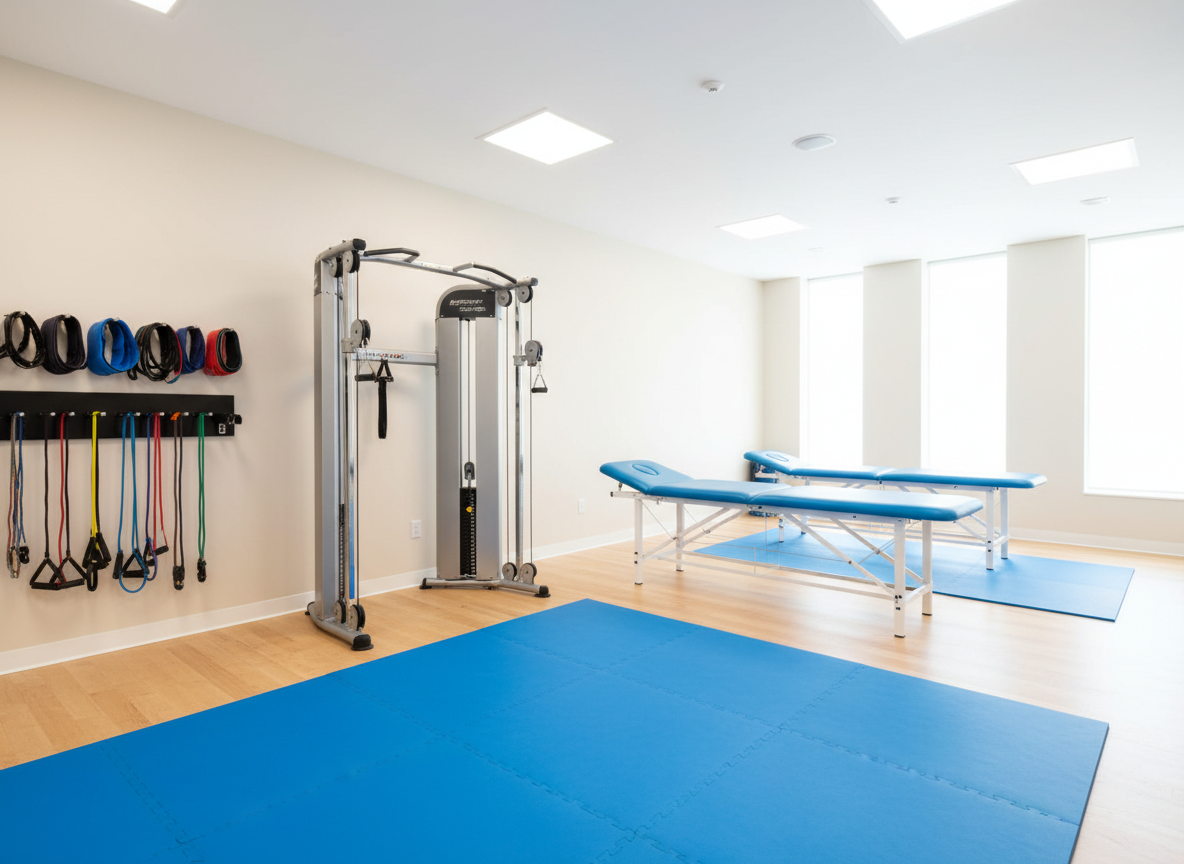
Rehab Fundamentals
Core principles that guide safe, effective recovery across spine, joint, tendon, and sports injuries.
Recovery Has Rules
Tissue healing follows biological laws that cannot be rushed — only supported. Bone, tendon, muscle, and disc all repair on their own timelines, and the most effective interventions work with those timelines, not against them.
Pain is not a reliable indicator of tissue damage. The nervous system generates pain as a protective output — not a damage report. This distinction changes everything about how you interpret symptoms and how aggressively you can move.
Load — applied at the right time, in the right amount — is the primary driver of tissue adaptation. Too little prolongs recovery. Too much causes setbacks. Finding that window is what good rehabilitation does.
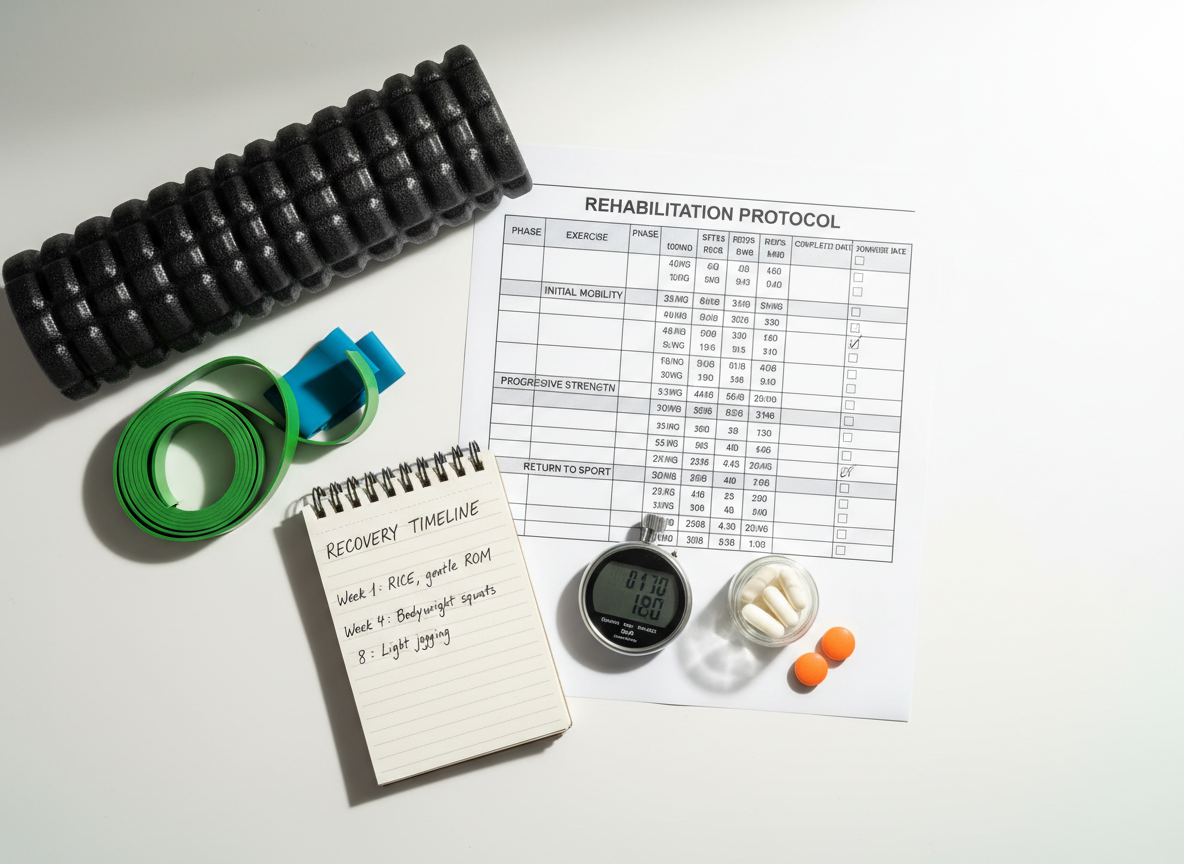
The Core Principles
Four Principles Every Recovery Plan Needs
01
Progressive Load
Tissues adapt to stress. Too little prolongs weakness. Too much causes setbacks. The therapeutic window — the right load at the right time — is the central skill of rehabilitation.
02
Pain Science
Pain is an output of the nervous system, not a readout of tissue damage. Understanding this protects against fear-avoidance, overprotection, and the spiral of chronic pain.
03
Movement First
Rest is rarely the answer. Controlled, graded movement reduces sensitization, maintains tissue quality, and rebuilds confidence. Motion is lotion — but dosage matters.
04
Patient-Led Recovery
The best rehab plan is one the patient understands and owns. Self-efficacy — the belief that you can influence your own recovery — is one of the strongest predictors of outcome.
Healing Timelines
What to Expect: Healing by Tissue Type
Muscle
Days to 6 weeks
Bruising, strains, and tears heal relatively quickly with the right load and protein intake.
Tendon
6 weeks to 6 months
Tendons are metabolically slow. Isometric loading early, progressive tendon loading throughout.
Cartilage / Joint
Months to 1+ year
Cartilage has limited blood supply. Synovial fluid and cyclic load are its main nutrition source.
Spinal Disc
6 weeks to 12+ months
Disc resorption and remodeling take time. Symptom resolution often precedes structural change.
These are ranges, not deadlines. Load management, sleep, nutrition, and stress all influence where in the range you land.
The Rehab Pathway
From Injury to Return: A Four-Phase Framework
Phase 1 — Acute (Week 1–2)
Protect and calm
Protect, reduce load, control inflammation. Ice, relative rest, gentle range of motion. Goal: tissue protection, pain management.
Phase 2 — Sub-Acute (Week 2–6)
Restore and load
Restore range of motion, introduce progressive loading, address movement patterns. Goal: tissue tolerance and functional mobility.
Phase 3 — Strengthening (Week 6–12+)
Build capacity
Progressive resistance training, neuromuscular control, sport- or task-specific loading. Goal: strength and endurance above pre-injury baseline.
Phase 4 — Return to Activity
Test and maintain
Graduated return to full activity with ongoing maintenance. Goal: durable function and injury prevention.
Common Recovery Mistakes
What Slows Recovery Down
Doing too much, too soon
The most common rehab error. Pain-free does not mean healed. Tissue strength lags behind symptom resolution by weeks to months — loading too early sets you back.
Chasing passive treatments
Massage, ultrasound, and ice feel good — but they don’t build capacity. Passive care has a role in the acute phase; it should not become the whole plan.
Complete rest
Immobilization weakens muscle, reduces circulation, and sensitizes the nervous system. Relative rest — not total rest — is almost always the right call after the first 48–72 hours.
Ignoring sleep and nutrition
Tissue repair happens at rest, driven by protein synthesis. Poor sleep and low protein intake are silent brakes on recovery that no exercise prescription can fully compensate for.
Your Role in Recovery
The strongest predictor of outcome is you.
Research on self-efficacy — the belief that you can influence your own health outcomes — consistently shows it to be one of the strongest predictors of recovery. Patients who understand their condition and trust the process move further, faster.
An active patient role means asking questions, completing home exercises, and understanding the “why” behind each intervention. Passive participation — waiting for treatments to work — is one of the most reliable predictors of prolonged recovery.
Informed patients recover faster. Not because information heals tissue, but because understanding reduces fear, improves adherence, and allows better decisions about load, rest, and when to push harder.
Explore Rehab Topics
Ready to dig into the details?
Each sub-topic below goes deeper — evidence, protocols, and practical guidance for your specific situation.
References & Sources
Research & Evidence Base
- Schoenfeld BJ & Grgic J. Evidence-Based Guidelines for Resistance Training Volume to Maximize Muscle Hypertrophy. Strength & Conditioning Journal. 2018. https://doi.org/10.1519/SSC.0000000000000363
- Moseley GL. Reconceptualising pain according to modern pain science. Physical Therapy Reviews. 2007. https://doi.org/10.1179/108331907X223010
- Dattilo M, et al. Sleep and muscle recovery: Endocrinological and molecular basis for a new and promising hypothesis. Medical Hypotheses. 2011. https://doi.org/10.1016/j.mehy.2011.03.047
- Bleakley CM, et al. Resting injured limbs delays recovery: a systematic review. Journal of Athletic Training. 2012. https://pubmed.ncbi.nlm.nih.gov/15353159/
- Sharma P & Maffulli N. Tendon Injury and Tendinopathy: Healing and Repair. Journal of Bone & Joint Surgery. 2005. https://doi.org/10.2106/JBJS.D.01850
- Caplan AI, et al. Fundamental principles of rehabilitation and musculoskeletal tissue healing. British Journal of Sports Medicine. 2020. https://pmc.ncbi.nlm.nih.gov/articles/PMC6973127/
- Mithoefer K, et al. Current concepts in the rehabilitation following articular cartilage repair procedures in the knee. Journal of Orthopaedic & Sports Physical Therapy. 2012. https://pubmed.ncbi.nlm.nih.gov/17063839/
- Zhong M, et al. Incidence of spontaneous resorption of lumbar disc herniation: a meta-analysis. Pain Physician. 2017. https://pmc.ncbi.nlm.nih.gov/articles/PMC7419225/
- Hayden JA, et al. Exercise therapy for treatment of non-specific low back pain. Cochrane Database of Systematic Reviews. 2005. https://doi.org/10.1002/14651858.CD000335.pub2
- Lauersen JB, et al. The effectiveness of exercise interventions to prevent sports injuries. British Journal of Sports Medicine. 2014. https://doi.org/10.1136/bjsports-2013-092538
- Dideriksen K. Muscle and collagen response to exercise and protein supplementation in rehabilitation. Scandinavian Journal of Medicine & Science in Sports. 2014. https://pubmed.ncbi.nlm.nih.gov/24435468/
- Nicholas MK & Linton SJ. What the research tells us about fear-avoidance and self-efficacy in musculoskeletal rehabilitation. JOSPT. 2011. https://doi.org/10.2519/jospt.2020.9319
This page is for educational purposes only and does not constitute medical advice. Always consult a qualified healthcare professional for personal health concerns.
 Dr. Austin Fontenot