Rehab Nutrition
Evidence-based fueling plans to support healing after injury, through demanding rehab phases, and back to full activity.
Nutrition Priorities For Intensive Recovery
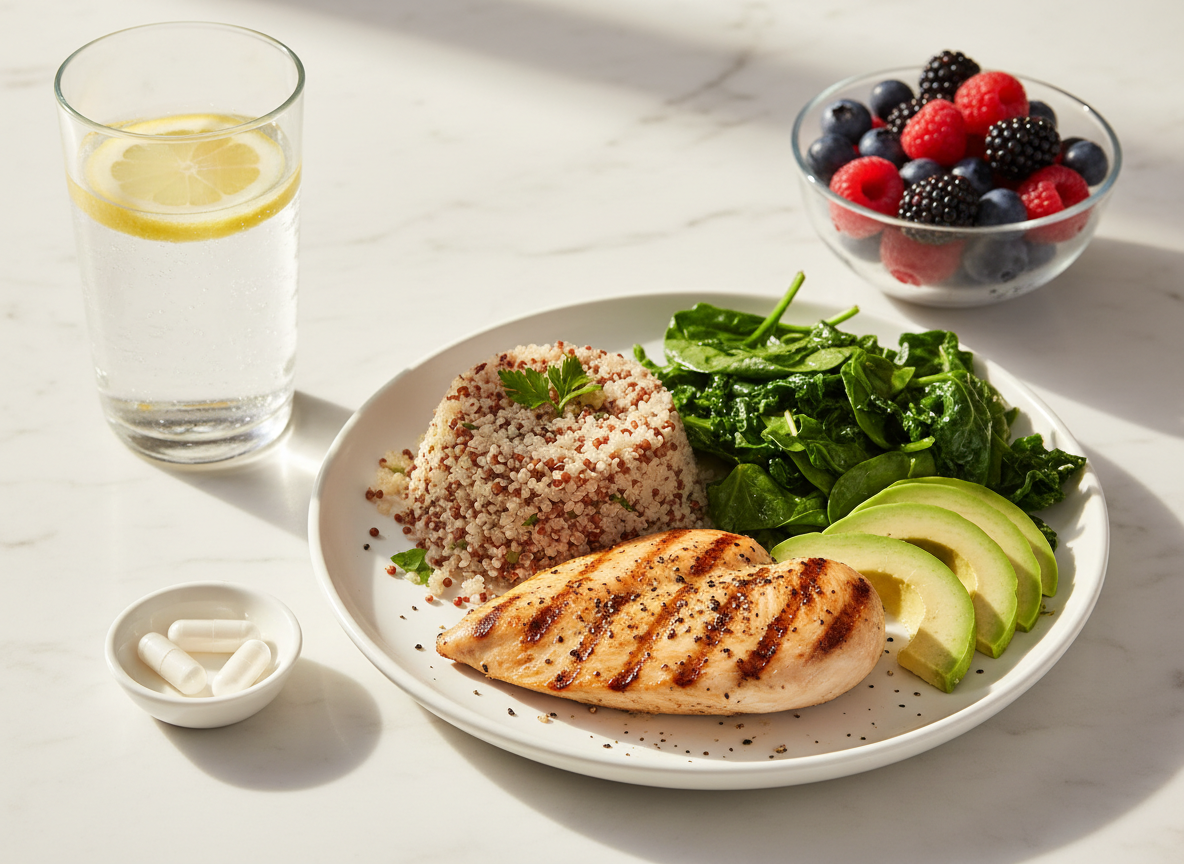
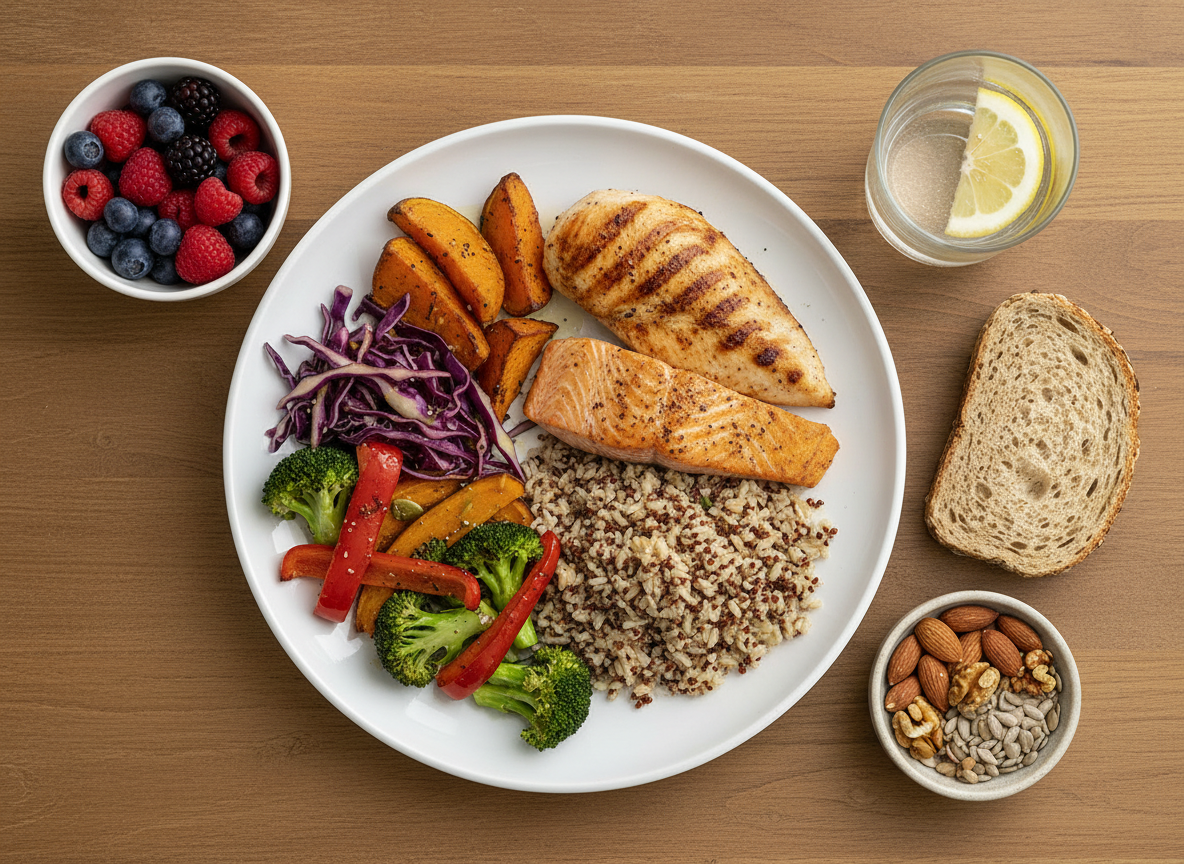
During heavy rehab, prioritize adequate calories, high-quality protein at each meal, and healthy fats to meet energy needs. Layer in colorful fruits, vegetables, and whole grains to supply vitamins, minerals, and antioxidants that drive tissue repair and immune support.
Pre-Rehab Nutrition: Getting Ahead of Recovery
Why prehab nutrition matters
Nutritional status at the time of injury and the start of rehab is one of the strongest independent predictors of recovery outcomes. Patients who are protein-depleted or micronutrient-deficient heal more slowly, experience higher complication rates, and lose more muscle during recovery (Wischmeyer et al., JPEN 2016). The goal of early nutrition after injury is to enter rehab well-fueled, anabolically primed, and micronutrient-replete.
Key priorities in the early recovery window
| Priority | Target | Evidence Base |
|---|---|---|
| Protein intake | 1.2–1.6 g/kg/day | Reduces post-op muscle loss; supports immune function (Deutz et al., Clin Nutr 2017) |
| Total caloric adequacy | Meet or mildly exceed TDEE | Prevents catabolism; supports glycogen storage (Wischmeyer, JPEN 2016) |
| Vitamin C | 500–1,000 mg/day | Collagen synthesis cofactor; immune support (Carr & Maggini, Nutrients 2017) |
| Vitamin D | Optimize to 40–60 ng/mL | Muscle function, immune modulation, fracture healing (Bischoff-Ferrari, JBMR 2011) |
| Iron (if deficient) | Correct pre-operatively | Anemia increases surgical risk and prolongs recovery (Muñoz et al., Transfusion 2011) |
| Omega-3s | 2–4 g EPA+DHA/day | Anti-inflammatory; may reduce post-op inflammation (Calder, Nutrients 2013) |
Note: Some clinicians recommend discontinuing omega-3s 1–2 weeks after an acute injury due to theoretical bleeding and bruising risk. Follow your care team’s specific guidance.
Acute Injury Phase Nutrition (Days 1–14)
The early injury window is characterized by elevated catabolism, inflammatory signaling, and reduced anabolic sensitivity. Protein needs increase substantially, and timing becomes more relevant than in baseline conditions.
Core principles
- Protein: 1.6–2.2 g/kg/day — the anabolic threshold rises post-surgery due to anabolic resistance (Breen & Phillips, Clin Nutr 2011)
- Leucine-rich protein sources: whey, eggs, animal proteins — leucine is the primary trigger for mTOR-mediated muscle protein synthesis (Norton & Layman, J Nutr 2006)
- Anti-inflammatory priority: Minimize ultra-processed foods, refined carbohydrates, and seed oils during the inflammatory phase
- Hydration: Even mild dehydration impairs wound healing and mucociliary clearance; target pale yellow urine
Nutrition and acute injury inflammation
In the acute phase of a musculoskeletal injury, the goal is not to completely suppress inflammation—an early inflammatory response is necessary for tissue repair—but to provide the raw materials for controlled resolution. Adequate protein, micronutrients, and anti-inflammatory fats support the healing cascade and help transition from inflammation to remodeling without blunting the process (Calder, Nutrients 2013; Smith et al., J Physiol 2015).
High-Demand Rehab Phase Nutrition
Once past the acute injury phase, nutrition shifts from wound support to muscle rebuilding, tendon remodeling, and return-to-function. This phase often underestimates caloric and protein demands — aggressive rehab without matched nutrition accelerates progress; mismatched nutrition stalls it.
Protein — still the priority
Protein needs remain elevated at 1.6–2.0 g/kg/day throughout active rehab. Distribution matters: 3–4 meals each containing 30–50 g of high-quality protein maximizes muscle protein synthesis across the day (Moore et al., J Physiol 2012). A leucine-rich pre-sleep protein dose (40 g casein or equivalent) further extends the anabolic window overnight (Res et al., Med Sci Sports Exerc 2012).
Carbohydrates — match to session intensity
During demanding rehab phases, carbohydrate intake supports glycogen replenishment and blunts excessive cortisol responses to training. Low-carbohydrate approaches during intensive rehab are generally counterproductive — adequate carbohydrate preserves muscle protein by reducing gluconeogenesis from amino acids (Volek et al., Nutrition 2002).
Creatine monohydrate
5 g/day of creatine monohydrate during active rehab attenuates disuse atrophy and accelerates strength recovery post-immobilization (Johnston et al., J Strength Cond Res 2009). This is one of the few supplements with direct evidence in rehab populations and is relevant here rather than the Supplements page.
Micronutrients for tissue remodeling
- Zinc: 15–30 mg/day — cofactor for collagen cross-linking and immune function (Lansdown et al., Wound Repair Regen 2007)
- Vitamin C: Continue 500–1,000 mg/day through active healing phases
- Magnesium: 300–400 mg/day (glycinate or malate) — muscle recovery, sleep quality, NMDA modulation
- Collagen peptides + Vitamin C: 15 g collagen + 50 mg vitamin C 30–60 min pre-exercise may enhance tendon/ligament remodeling (Shaw et al., Am J Clin Nutr 2017)
Quick Reference: Fueling by Phase
| Phase | Top Priorities | Key Numbers |
|---|---|---|
| Pre-surgery (4–8 weeks) | Protein loading, micronutrient repletion, caloric adequacy | 1.2–1.6 g/kg protein; Vitamin D to 40–60 ng/mL |
| Immediate post-op (Days 1–14) | Protein, leucine, hydration, anti-inflammatory eating | 1.6–2.2 g/kg protein; 3+ L fluid/day |
| Active rehab | Protein distribution, carbs matched to intensity, creatine | 1.6–2.0 g/kg protein; 5 g creatine/day |
| Return to activity | Maintain protein, taper supplementation, monitor body composition | 1.4–1.8 g/kg protein; reassess micronutrients |
A Note on Caloric Restriction During Recovery
Weight management goals should generally be deferred until active healing is complete. Caloric restriction during active injury recovery or intensive rehab impairs muscle protein synthesis, slows wound healing, and blunts the anabolic response to exercise — even when protein intake is adequate (Mettler et al., Med Sci Sports Exerc 2010). If body composition is a concern, address it before injury occurs when possible, or after the acute recovery phase, in consultation with a registered dietitian.
Content reflects current clinical evidence in sports nutrition and orthopedic rehabilitation as of 2026. Nutritional needs are highly individual — work with your care team for personalized guidance.
References & Sources
- Morton RW, et al. (2018). A systematic review, meta-analysis and meta-regression of the effect of protein supplementation on resistance training-induced gains in muscle mass and strength in healthy adults. British Journal of Sports Medicine, 52(6), 376–384.
- Stokes T, et al. (2018). Recent perspectives regarding the role of dietary protein for the promotion of muscle hypertrophy with resistance exercise training. Nutrients, 10(2), 180.
- Norton LE & Layman DK. (2006). Leucine regulates translation initiation of protein synthesis in skeletal muscle after exercise. Journal of Nutrition, 136(2), 533S–537S.
- Kerksick CM, et al. (2017). International Society of Sports Nutrition position stand: Nutrient timing. Journal of the International Society of Sports Nutrition, 14(1), 33.
- Burke LM, et al. (2011). Carbohydrates for training and competition. Journal of Sports Sciences, 29(S1), S17–S27.
- Thomas DT, et al. (2016). American College of Sports Medicine joint position statement: Nutrition and athletic performance. Medicine & Science in Sports & Exercise, 48(3), 543–568.
- Sawka MN, et al. (2007). American College of Sports Medicine position stand: Exercise and fluid replacement. Medicine & Science in Sports & Exercise, 39(2), 377–390.
- Antonio J, et al. (2021). Common questions and misconceptions about creatine supplementation. Journal of the International Society of Sports Nutrition, 18(1), 13.
- Shaw G, et al. (2017). Vitamin C-enriched gelatin supplementation before intermittent activity augments collagen synthesis. American Journal of Clinical Nutrition, 105(1), 136–143.
- Tipton KD. (2015). Nutritional support for exercise-induced injuries. Sports Medicine, 45(Suppl 1), S93–S104.
- Wall BT, et al. (2013). Disuse impairs the muscle protein synthetic response to protein ingestion in healthy men. Journal of Clinical Endocrinology & Metabolism, 98(12), 4872–4881.
- Pasiakos SM, et al. (2014). Effects of protein supplements on muscle damage, soreness and recovery of muscle function and physical performance. Sports Medicine, 44(5), 655–670.
 Dr. Austin Fontenot