
Mobility Essentials
How Joints & Soft Tissue Work — And What You Can Do About It
Understand and improve how your joints and soft tissues move, feel, and perform every day.
The Basics
The Architecture of Movement
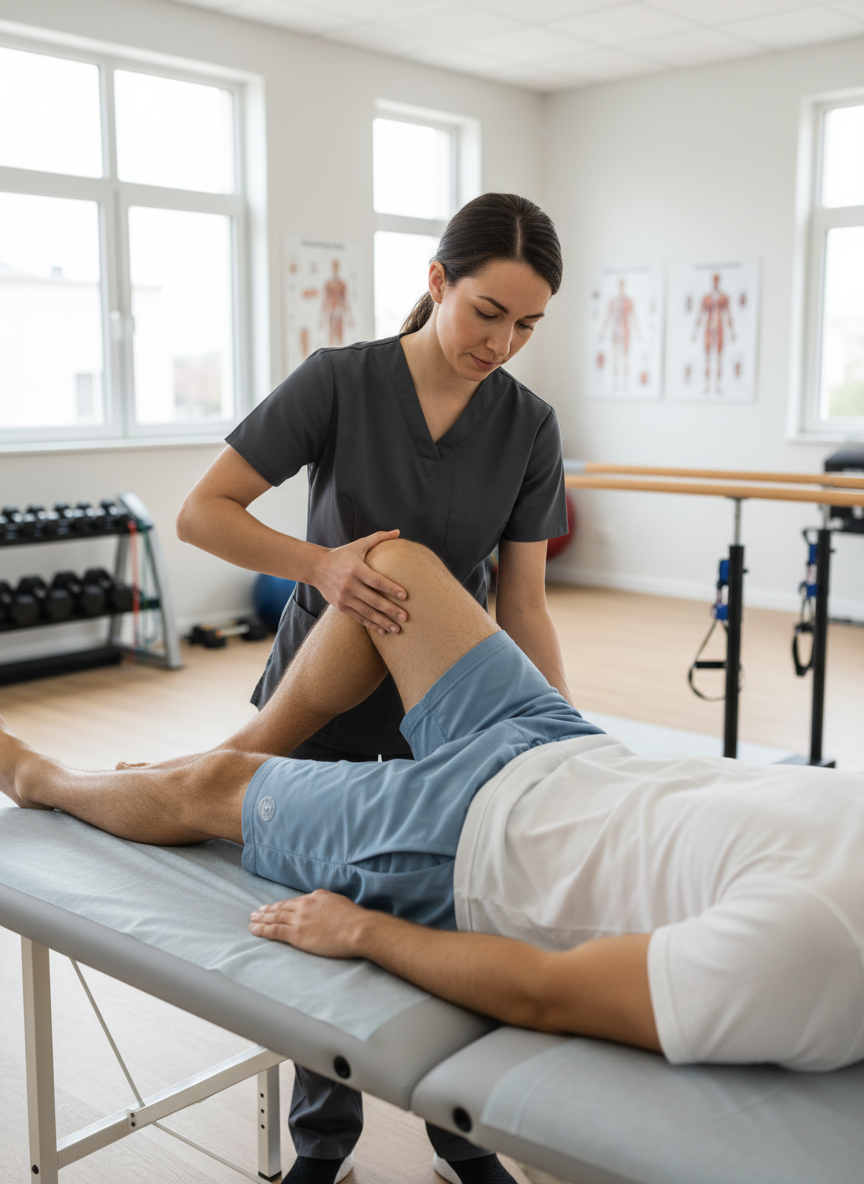
Synovial joints are the most common movable joints in the body — the knees, hips, shoulders, and spine among them. At each joint, a smooth layer of articular cartilage caps the bone ends, absorbing load and distributing force so that movement stays fluid and low-friction under pressure.
Sealed within the joint capsule, synovial fluid lubricates these surfaces and nourishes the cartilage, keeping the joint gliding cleanly through its range. But joints never work alone. Soft tissue — tendons, ligaments, fascia, and muscle — works in concert with them to produce and control movement, transmitting force and stabilizing the structure at every step.
Evidence Review
What the Research Says
Cartilage responds to how we move. Kujala et al. (2005), writing in Osteoarthritis and Cartilage, found that moderate physical activity helps maintain cartilage health better than inactivity — the joint’s load-bearing tissue depends on regular, controlled loading to stay resilient rather than degrading from disuse.
Soft tissue adapts to mechanical demand. Schleip & Müller (2013), in the Journal of Bodywork and Movement Therapies, describe how connective tissue and fascia respond to mechanical loading and stretching — remodeling over time to become more extensible and better organized in response to how it is trained.
Range of motion is trainable. Behm & Chaouachi (2011), in the European Journal of Applied Physiology, reviewed the effects of static and dynamic stretching on range of motion and performance — clarifying when each method improves mobility and how timing around activity shapes the outcome.
Evidence-Based Mobility Practices
01
Dynamic Warm-Up
Leg swings, arm circles, and hip rotations before activity prepare joints and soft tissue for load. Movement-based warm-ups raise tissue temperature and prime the range you’re about to use. Cook et al. (2010).
02
Static Stretching
Hold stretches for 30 to 60 seconds after activity, targeting the major muscle groups. Post-activity is when static stretching supports range of motion without blunting performance. Behm & Chaouachi (2011).
03
Foam Rolling / Self-Myofascial Release
Rolling reduces tissue stiffness and improves short-term range of motion without sacrificing strength. A few minutes on key areas can prime tissue before training or aid recovery after. Cheatham et al. (2015), International Journal of Sports Physical Therapy.
04
Joint Mobility Drills
Controlled articular rotations (CARs) for the spine, hips, and shoulders train active range at the joint’s end positions. Slow, deliberate reps build ownership over the ranges you have. Based on FRC principles (Andreo Spina).
Get Started
Start With What You Can Control
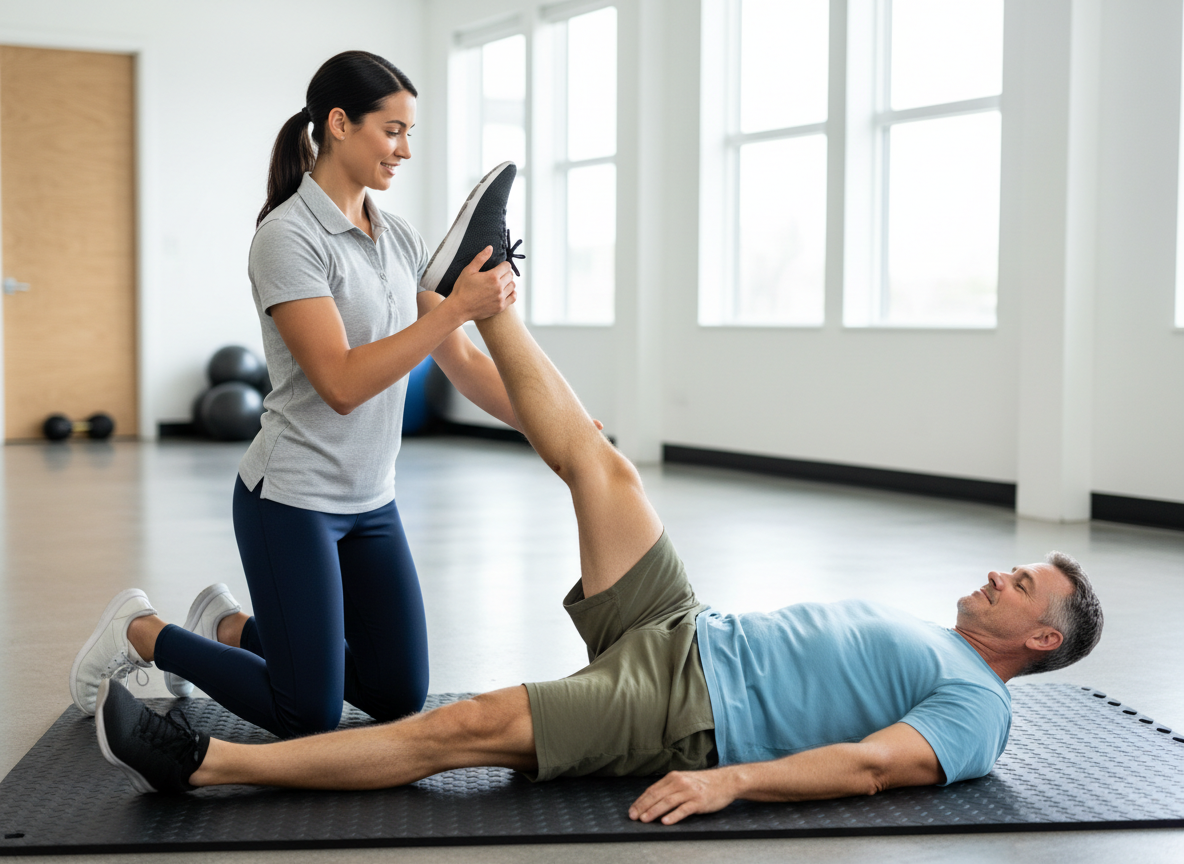
You don’t need an hour or a full gym. Begin with 10 minutes of daily mobility work — a short dynamic warm-up, a few joint drills, and targeted stretching for the areas that feel tight. Consistency matters more than intensity: the tissue adapts to what you do regularly, not to the occasional maximal effort.
References
- Behm, D.G., & Chaouachi, A. (2011). A review of the acute effects of static and dynamic stretching on performance. European Journal of Applied Physiology, 111(11), 2633–2651.
- Cheatham, S.W., et al. (2015). The effects of self-myofascial release using a foam roll or roller massager on joint range of motion, muscle recovery, and performance. International Journal of Sports Physical Therapy, 10(6), 827–838.
- Kujala, U.M., et al. (2005). Physical activity and osteoarthritis. Osteoarthritis and Cartilage, 13(1), 3–9.
- Schleip, R., & Müller, D.G. (2013). Training principles for fascial connective tissues. Journal of Bodywork and Movement Therapies, 17(1), 103–115.
This content is for educational purposes only and does not constitute medical advice. Consult a qualified healthcare provider before beginning any new exercise or mobility program.
 Dr. Austin Fontenot