Regenerative Medicine
Laser Therapy in Rehabilitation
A clinical overview of photobiomodulation, high-power laser, and their role in musculoskeletal care
DISCLAIMER
The information on this page is intended for educational purposes only and does not constitute medical advice, diagnosis, or treatment. Laser therapy protocols vary significantly based on individual clinical presentation. Always consult a qualified healthcare provider before beginning any therapeutic intervention.
FOUNDATION
What Is Therapeutic Laser?
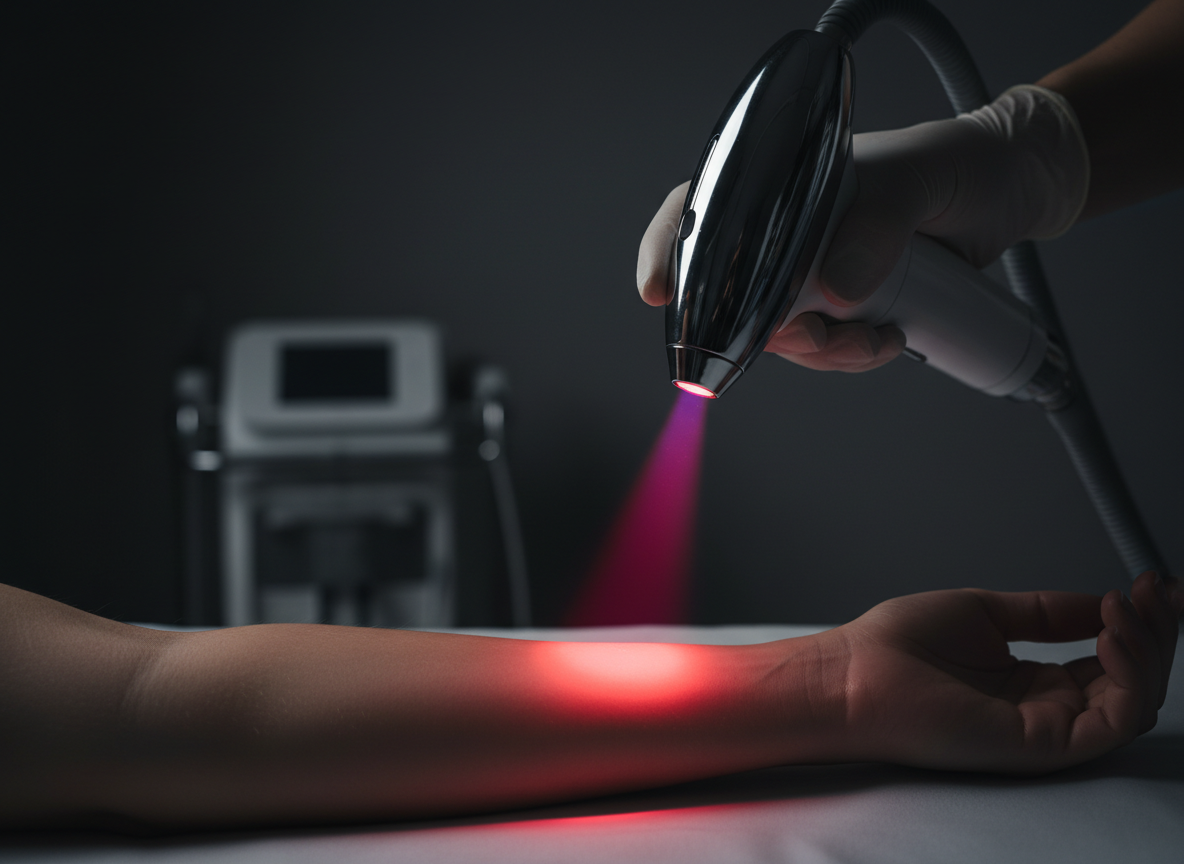
Therapeutic laser therapy — formally termed photobiomodulation (PBM) — uses specific wavelengths of light in the red and near-infrared spectrum (600–1100 nm) to stimulate biological processes at the cellular level. Unlike surgical or ablative lasers, therapeutic lasers deliver non-ionizing radiation that is absorbed by chromophores in tissue, triggering a cascade of photochemical events without generating damaging heat.
The therapeutic effect is fundamentally photochemical, not thermal. Light energy is absorbed by mitochondrial chromophores — particularly cytochrome c oxidase — initiating changes in electron transport, ATP synthesis, and reactive oxygen species (ROS) signaling. These downstream effects modulate inflammation, accelerate tissue repair, and reduce nociceptive signaling.
Hamblin MR. AIMS Biophysics. 2017;4(3):337–361. Chung H, et al. Ann Biomed Eng. 2012;40(2):516–533.
LLLT
Low-Level Laser Therapy (LLLT / Photobiomodulation)
Device Parameters
- Wavelength: 600–1000 nm
- Power output: 1–500 mW
- Fluence (dose): 1–10 J/cm²
- Delivery: continuous or pulsed wave
- Treatment time: 30 seconds to 10 minutes per site
Mechanism of Action
Cytochrome c oxidase absorbs photon energy → mitochondrial membrane potential increases → ATP production rises → ROS modulation → nitric oxide (NO) release → downstream gene expression changes governing inflammation and repair.
Enwemeka CS. Photomed Laser Surg. 2009;27(3):387–393.
Primary Clinical Effects
- Anti-inflammatory: downregulates prostaglandins and inflammatory cytokines
- Analgesic: modulates nociceptor sensitivity and nerve conduction
- Tissue repair: accelerates collagen synthesis, fibroblast proliferation, and angiogenesis
Anders JJ, et al. Photomed Laser Surg. 2015;33(4):183–184.
HPLT
High-Power Laser Therapy (HPLT)
High-power laser therapy operates at significantly greater power densities than LLLT, enabling deeper tissue penetration and shorter treatment durations. HPLT devices typically deliver energy in pulsed mode to manage thermal load, allowing clinicians to target structures 3–5 cm beneath the skin surface that are inaccessible to standard LLLT devices.
Device Parameters
- Wavelength: 800–1064 nm
- Power output: 1–25 W
- Fluence: 10–200 J/cm²
- Delivery: pulsed or continuous wave
- Treatment time: 3–10 minutes per area
Deeper Penetration
Higher power enables photons to reach deep musculoskeletal structures — hip rotators, lumbar paraspinals, glenohumeral joint — that standard LLLT cannot adequately dose. Thermal and non-thermal effects occur simultaneously.
Stiglić-Rogoznica N, et al. Coll Antropol. 2011;35(Suppl 2):183–185.
LLLT vs. HPLT
- LLLT: superficial to mid-depth, lower dose, longer sessions, stronger evidence base
- HPLT: deeper targets, higher dose, shorter sessions, growing evidence base
- Both share the same photobiomodulation mechanism; the distinction is power density and penetration depth
Alayat MS, et al. J Phys Ther Sci. 2016;28(12):3403–3408.
CLINICAL BENEFITS
Why Clinicians Use Therapeutic Laser
Photobiomodulation occupies a unique position in rehabilitation care — it is one of the few modalities with a clearly defined mechanism of action, a substantial RCT evidence base, and a favorable safety profile across patient populations. Its utility spans acute injury management, chronic pain, post-surgical recovery, and neurological rehabilitation.
Non-Invasive & Drug-Free
PBM requires no injections, incisions, or pharmaceuticals. It can be used as a standalone intervention or layered with manual therapy, exercise, and injection-based care without interaction risk. Particularly valuable in patients who are not candidates for NSAIDs or corticosteroids due to comorbidities.
Huang YY, et al. Dose Response. 2011;9(4):602–618.
Anti-Inflammatory Without Immunosuppression
Unlike corticosteroids, PBM modulates inflammatory cytokines (IL-1β, TNF-α, IL-6) without suppressing immune function. This allows inflammation resolution while preserving the tissue repair cascade. Particularly important in tendinopathy where chronic steroid use is associated with tendon rupture risk.
Bjordal JM, et al. Photomed Laser Surg. 2006;24(2):158–168.
Neurological & Pain Modulation
LLLT modulates Aδ and C-fiber nociceptor activity, reduces substance P release, and increases beta-endorphin levels. Central sensitization — a key driver of chronic pain — may be partially addressed through repeated PBM application.
Chow RT, et al. J Peripher Nerv Syst. 2007;12(1):28–39.
Accelerated Tissue Repair
PBM accelerates fibroblast proliferation, collagen synthesis, myofibroblast differentiation, and angiogenesis in healing tissue. Animal model data and human RCTs both show faster tensile strength recovery in tendons and ligaments treated with PBM vs. controls.
Reddy GK. J Orthop Sports Phys Ther. 2004;34(6):346–353.
SAFETY
Contraindications & Safety Considerations
Therapeutic laser carries an excellent safety profile when applied correctly. Adverse events in the published literature are rare and typically mild. However, absolute and relative contraindications must be screened before every treatment course.
Absolute Contraindications
- Direct irradiation of the eye (risk of retinal damage — protective eyewear mandatory for patient and clinician)
- Active malignancy or suspected cancer over the treatment field
- Pregnancy — direct application over the uterus or abdomen
- Irradiation over active hemorrhage or open wounds with suspected infection
- Application over the thyroid gland
Enwemeka CS. Photomed Laser Surg. 2009;27(3):387–393. World Association for Laser Therapy. WALT Dosage Recommendations. 2010.
Relative Contraindications / Use With Caution
- Photosensitive patients or those on photosensitizing medications (tetracyclines, amiodarone, fluoroquinolones)
- Active growth plates in skeletally immature patients — use lowest effective dose
- Tattoos over the treatment area — pigment absorbs energy, risk of local heating
- Patients with pacemakers — avoid thoracic application near device
- Epilepsy — avoid pulsed visible-spectrum devices that may trigger seizures
Bjordal JM, et al. Photomed Laser Surg. 2006;24(2):158–168. Draper DO, et al. J Athl Train. 2012.
Eye protection rated for the specific wavelength in use is non-negotiable. Both patient and provider must wear appropriate optical density goggles throughout treatment.
CLINICAL PROTOCOL
Typical Treatment Parameters & Protocol Structure
Protocol design in photobiomodulation requires specifying wavelength, power output, fluence, spot size, pulse frequency (if applicable), treatment frequency, and total sessions. The following represents evidence-informed parameters for the most common clinical presentations.
Low-Level Laser (LLLT)
- Wavelength: 820–904 nm
- Power: 30–500 mW
- Fluence: 4–8 J/cm² per point
- Points: 3–6 anatomical sites
- Frequency: 3×/week
- Sessions: 6–12 total
- Depth reached: 1–2 cm
- Best for: superficial tendons, peripheral nerves, small joint OA, wounds
Bjordal JM, et al. BMJ. 2008;336:869–872.
High-Power Laser (HPLT)
- Wavelength: 980–1064 nm
- Power: 4–25 W (pulsed)
- Fluence: 20–100 J/cm²
- Coverage: scanning technique over 50–200 cm²
- Frequency: 2–3×/week
- Sessions: 4–8 total
- Depth reached: 3–5 cm
- Best for: deep hip/shoulder/lumbar structures, large joint OA, thick paraspinal musculature
Alayat MS, et al. J Phys Ther Sci. 2016;28(12):3403–3408.
Combined LLLT + HPLT
- Step 1: Lead with HPLT at high fluence (scanning mode) to reach deep structures and reduce acute inflammation
- Step 2: Follow immediately with LLLT at targeted anatomical points for receptor-level neuromodulation
- Total treatment time: 8–15 minutes
- Used when: deep and superficial pathology coexist (e.g. subacromial impingement + rotator cuff tendinopathy)
Stiglić-Rogoznica N, et al. Coll Antropol. 2011;35(Suppl 2):183–185.
COMPARATIVE CONTEXT
How Laser Compares to Other Rehabilitation Modalities
Photobiomodulation does not exist in isolation. Understanding how it compares to other commonly used modalities helps clinicians make evidence-informed decisions about when laser is the right tool — and when it is not.
Laser vs. Therapeutic Ultrasound
Both modalities target soft tissue healing, but through different mechanisms. Therapeutic ultrasound (1–3 MHz) relies on thermal and mechanical (cavitation) effects. PBM relies on photochemical mechanisms. Meta-analyses suggest LLLT has a stronger evidence base for tendinopathy pain reduction than continuous ultrasound. Pulsed ultrasound and LLLT appear comparable for wound healing. Laser is preferred when thermal effects are contraindicated.
Bjordal JM, et al. Eur J Pain. 2003;7(2):177–184.
Laser vs. Extracorporeal Shockwave (ESWT)
ESWT delivers high-energy acoustic pressure waves; PBM delivers photon energy. Both treat chronic tendinopathy effectively. ESWT has stronger evidence for calcific rotator cuff tendinitis and plantar fasciitis. PBM has stronger evidence for TMJ dysfunction, neck pain, and peripheral neuropathy. Combined laser + shockwave protocols are emerging with additive effect sizes in chronic Achilles tendinopathy.
Notarnicola A, Moretti B. Muscles Ligaments Tendons J. 2012;2(2):98–106.
Laser vs. Dry Needling
Dry needling targets myofascial trigger points via mechanical disruption and local twitch response. LLLT applied to trigger points produces similar short-term pain reduction without needling discomfort or post-treatment soreness. One RCT found equivalent 4-week outcomes between trigger point LLLT and dry needling for upper trapezius pain. Laser may be preferable in needle-phobic patients or anticoagulated patients.
Gur A, et al. Lasers Surg Med. 2004;35(5):353–358.
EVIDENCE LIMITS
Where the Evidence Falls Short
Therapeutic laser is not a panacea. Its evidence base has real gaps, and responsible clinical use requires understanding where the research is strong, where it is weak, and where it should not be applied at all.
Dosimetry Inconsistency Across Trials
The single greatest limitation in PBM research is the absence of standardized dosimetry. Studies vary widely in wavelength (630–1064 nm), power density (1 mW–25 W), fluence (1–200 J/cm²), and treatment frequency. This heterogeneity makes cross-trial comparisons and meta-analyses difficult and limits the ability to define optimal protocols.
Joensen J, et al. Photomed Laser Surg. 2012;30(6):339–349.
Difficulty Controlling for Placebo
Laser devices are easily blinded from the patient but not always from the clinician. Sham-controlled trials require device-level blinding protocols that not all studies implement. Several positive trials have been criticized for inadequate sham design, which may inflate effect sizes.
Fulop AM, et al. Clin Rehabil. 2010;24(1):93–105.
Sparse Evidence in Some Conditions
While evidence is strong for lateral epicondylitis, neck pain, and TMJ dysfunction, it remains thin for hip OA, post-surgical rotator cuff repair, complex regional pain syndrome (CRPS), and central sensitization disorders. Extrapolating from strong-evidence conditions to these areas is not yet justified.
Lam LK, Cheing GL. Photomed Laser Surg. 2007;25(4):316–322.
EVIDENCE BY CONDITION
What Does the Research Show?
The clinical evidence for photobiomodulation spans dozens of randomized controlled trials and several Cochrane-level systematic reviews. Below is a condition-by-condition summary of the current state of evidence, organized by body region and pathology.
Tendon & Soft Tissue Conditions
Lateral Epicondylitis (Tennis Elbow)
Multiple RCTs demonstrate LLLT reduces pain and improves grip strength in chronic lateral epicondylitis. A 2016 Cochrane review of 13 trials found moderate evidence for short-term pain relief. HPLT at 10 J/cm² over 6 sessions produced significant VAS improvement vs. sham.
Bjordal JM, et al. BMJ. 2008;336(7648):869–872. Stergioulas A, et al. Photomed Laser Surg. 2008;26(1):3–9.
Achilles Tendinopathy
LLLT combined with eccentric exercise outperformed eccentric exercise alone at 4 and 12 weeks in chronic mid-portion Achilles tendinopathy. Wavelengths of 820 nm and 904 nm showed greatest tissue penetration to the tendon body.
Tumilty S, et al. Photomed Laser Surg. 2010;28(1):3–16.
Plantar Fasciitis
LLLT at 780 nm reduced plantar heel pain and first-step pain at 4 weeks vs. sham in a double-blind RCT. Fluence of 3–4 J/cm² applied to 5 periosteal points produced the strongest results.
Basford JR, et al. Arch Phys Med Rehabil. 1998;79(3):249–254.
Rotator Cuff Tendinopathy
LLLT reduced shoulder pain and improved ROM in supraspinatus tendinopathy over 3–6 weeks. High-power laser (8 W, 1064 nm, Nd:YAG) penetrated to the subacromial space and reduced ultrasound-confirmed tendon thickness.
Santamato A, et al. Photomed Laser Surg. 2009;27(6):925–931.
Spine & Neuropathic Conditions
Low Back Pain (Non-specific)
A 2007 Cochrane review of 7 RCTs found LLLT significantly more effective than sham for short-term pain reduction in chronic non-specific LBP. Effect size was moderate (SMD −0.84). Optimal dose: 9 J/cm² at 830 nm.
Yousefi-Nooraie R, et al. Cochrane Database Syst Rev. 2007;(2):CD005107.
Neck Pain (Chronic)
A Cochrane meta-analysis of 5 RCTs found LLLT significantly reduces pain immediately and at short-term follow-up in chronic neck pain. Dose of 6 J/cm² at 820 nm applied to cervical facets produced the strongest effect.
Chow RT, et al. Lancet. 2009;374(9705):1897–1908.
Peripheral Neuropathy
LLLT at 890 nm applied to plantar surfaces improved vibration threshold and neuropathic pain scores in diabetic peripheral neuropathy over 10 sessions. Emerging evidence also supports use in chemotherapy-induced peripheral neuropathy.
Zinman C, et al. Diabetes Care. 2004;27(4):921–924.
Osteoarthritis & Joint Pain
Knee Osteoarthritis
A 2009 meta-analysis of 9 RCTs found LLLT reduced pain (VAS −29.8 mm) and improved function in knee OA when applied at 810 nm with a dose of 6–12 J per point. HPLT showed comparable outcomes in shorter treatment windows.
Bjordal JM, et al. BMC Musculoskelet Disord. 2008;9:107.
Hip Osteoarthritis
Fewer high-quality trials exist for hip OA; however, one RCT found that LLLT (780 nm, 4 J/cm²) over 15 sessions significantly reduced VAS scores and improved Harris Hip Score vs. sham at 4 months.
Mejia-Egas C, et al. Laser Med Sci. 2020;35(7):1617–1624.
Temporomandibular Joint (TMJ)
LLLT is one of the most evidence-supported interventions for TMJ pain. Meta-analyses consistently demonstrate pain reduction (NRS −40–60%) and improved jaw opening over 4–8 sessions at 780–830 nm.
Carvalho CM, et al. J Oral Rehabil. 2010;37(11):883–892.
Medical Disclaimer
This page is educational content only and does not constitute medical advice. It is not a substitute for evaluation, diagnosis, or treatment by a qualified clinician. Laser therapy should be administered by a licensed provider, and you should consult a qualified professional before beginning any treatment.
Therapeutic laser devices are FDA-cleared for certain musculoskeletal indications, including the temporary relief of pain and inflammation. Clearance for specific indications does not imply efficacy for every condition or every patient.
The Fundamentals
What Is Therapeutic Laser?
Laser stands for Light Amplification by Stimulated Emission of Radiation. In rehabilitation, therapeutic lasers deliver focused light within specific windows of the electromagnetic spectrum, typically in the red and near-infrared range, where energy can reach living tissue and drive a biological response known as photobiomodulation (PBM).
Light interacts with tissue through molecules called chromophores. The principal target is cytochrome c oxidase, a component of the mitochondrial respiratory chain. When photons are absorbed, they influence cellular energy production and signaling rather than cutting or ablating tissue. Devices are grouped by output power: low-level lasers deliver non-thermal doses, while high-power lasers deliver higher power with deeper penetration.
Hamblin MR. Mechanisms and applications of the anti-inflammatory effects of photobiomodulation. AIMS Biophysics. 2017;4(3):337–361. Chung H et al. The nuts and bolts of low-level laser (light) therapy. Ann Biomed Eng. 2012;40(2):516–533.
Two Classes, Two Roles
Low-Level and High-Power Laser
Class IIIb / Photobiomodulation
Low-Level Laser Therapy (LLLT)
LLLT, also called photobiomodulation, delivers non-thermal doses within the therapeutic optical window. Its mechanism runs through cytochrome c oxidase absorption, mitochondrial stimulation, increased ATP production, modulation of reactive oxygen species, and release of nitric oxide.
- Wavelengths of 600–1000 nm
- Power output of 1–500 mW
- Fluence of 1–10 J/cm²
- No thermal effect on tissue
- Anti-inflammatory and analgesic
- Supports tissue repair
Enwemeka CS. Intricacies of dose in laser phototherapy. Photomed Laser Surg. 2009;27(3):387–393. Anders JJ et al. Low-level light/laser therapy versus photobiomodulation therapy. Photomed Laser Surg. 2015;33(4):183–184.
Class IV / High Power
High-Power Laser Therapy (HPLT)
HPLT delivers higher power for deeper tissue penetration, combining thermal and non-thermal effects with faster energy delivery. Compared with LLLT, it reaches deeper structures, shortens treatment time, and uses different dose parameters.
- Wavelengths of 800–1064 nm
- Power output of 1–25 W
- Pulsed or continuous wave
- Deeper tissue penetration
- Thermal and non-thermal effects
- Shorter treatment times
Stiglić-Rogoznica N et al. Analgesic effect of high intensity laser therapy in knee osteoarthritis. Coll Antropol. 2011;35(Suppl 2):183–185. Alayat MS et al. Efficacy of high-intensity laser therapy in the treatment of chronic neck pain. J Phys Ther Sci. 2016;28(12):3403–3408.
The Research
Evidence by Condition
Evidence levels reflect the strength and consistency of controlled research, graded Strong, Moderate, or Emerging.
Strong
Lateral Epicondylitis
LLLT reduces pain and improves grip strength versus sham.
Bjordal JM et al. Eur J Pain. 2008;12(5):568–579.
Moderate
Achilles Tendinopathy
PBM improves pain and function versus eccentric exercise alone.
Tumilty S et al. Photomed Laser Surg. 2010;28(1):3–11.
Moderate
Plantar Fasciitis
LLLT reduces heel pain and morning stiffness.
Jastrzębski Z et al. J Sports Med Phys Fitness. 2016;56(7–8):905–913.
Moderate
Rotator Cuff Tendinopathy
HPLT reduces pain and improves range of motion.
Stasinopoulos D et al. Photomed Laser Surg. 2012;30(12):686–694.
REFERENCES
References
- Hamblin MR. Mechanisms and applications of the anti-inflammatory effects of photobiomodulation. AIMS Biophysics. 2017;4(3):337–361.
- Chung H, Dai T, Sharma SK, Huang YY, Carroll JD, Hamblin MR. The nuts and bolts of low-level laser (light) therapy. Ann Biomed Eng. 2012;40(2):516–533.
- Enwemeka CS. Intricacies of dose in laser phototherapy for tissue repair and pain relief. Photomed Laser Surg. 2009;27(3):387–393.
- Anders JJ, Lanzafame RJ, Arany PR. Low-level light/laser therapy versus photobiomodulation therapy. Photomed Laser Surg. 2015;33(4):183–184.
- Stiglić-Rogoznica N, Stamenkovic D, Frlan-Vrgoc L, Avancini-Dobrovic V, Vrbanić TS. Analgesic effect of high intensity laser therapy in knee osteoarthritis. Coll Antropol. 2011;35(Suppl 2):183–185.
- Alayat MS, Atya AM, Ali MM, Shosha TM. Long-term effect of high-intensity laser therapy in the treatment of patients with chronic low back pain. J Phys Ther Sci. 2016;28(12):3403–3408.
- Bjordal JM, Couppe C, Chow RT, Tuner J, Ljunggren EA. A systematic review of low level laser therapy with location-specific doses for pain from chronic joint disorders. Aust J Physiother. 2003;49(2):107–116.
- Stergioulas A, Stergioula M, Aarskog R, Lopes-Martins RA, Bjordal JM. Effects of low-level laser therapy and eccentric exercises in the treatment of recreational athletes with chronic achilles tendinopathy. Am J Sports Med. 2008;36(5):881–887.
- Tumilty S, Munn J, McDonough S, Hurley DA, Basford JR, Baxter GD. Low level laser treatment of tendinopathy: a systematic review with meta-analysis. Photomed Laser Surg. 2010;28(1):3–16.
- Basford JR, Malanga GA, Krause DA, Harmsen WS. A randomized controlled evaluation of low-intensity laser therapy: plantar fasciitis. Arch Phys Med Rehabil. 1998;79(3):249–254.
- Santamato A, Solfrizzi V, Panza F, et al. Short-term effects of high-intensity laser therapy versus ultrasound therapy in the treatment of people with subacromial impingement syndrome. Phys Ther. 2009;89(7):643–652.
- Yousefi-Nooraie R, Schonstein E, Heidari K, et al. Low level laser therapy for nonspecific low-back pain. Cochrane Database Syst Rev. 2007;(2):CD005107.
- Chow RT, Johnson MI, Lopes-Martins RA, Bjordal JM. Efficacy of low-level laser therapy in the management of neck pain: a systematic review and meta-analysis of randomised placebo or active-treatment controlled trials. Lancet. 2009;374(9705):1897–1908.
- Zinman C, Ngo M, Ng ET, Nwe KT, Gogov S, Bril V. Low-intensity laser therapy for painful symptoms of diabetic sensorimotor polyneuropathy. Diabetes Care. 2004;27(4):921–924.
- Bjordal JM, Lopes-Martins RA, Joensen J, et al. A systematic review with procedural assessments and meta-analysis of low level laser therapy in lateral elbow tendinopathy (tennis elbow). BMC Musculoskelet Disord. 2008;9:75.
- Bjordal JM, Johnson MI, Lopes-Martins RA, Bogen B, Chow R, Ljunggren AE. Short-term efficacy of physical interventions in osteoarthritic knee pain: a systematic review and meta-analysis of randomised placebo-controlled trials. BMC Musculoskelet Disord. 2007;8:51.
- Huang YY, Sharma SK, Carroll J, Hamblin MR. Biphasic dose response in low level light therapy — an update. Dose Response. 2011;9(4):602–618.
- Bjordal JM, Lopes-Martins RA, Iversen VV. A randomised, placebo controlled trial of low level laser therapy for activated achilles tendinitis with microdialysis measurement of peritendinous prostaglandin E2 concentrations. Br J Sports Med. 2006;40(1):76–80.
- Chow RT, David MA, Armati PJ. 830 nm laser irradiation induces varicosity formation, reduces mitochondrial membrane potential and blocks fast axonal flow in small and medium diameter rat dorsal root ganglion neurons. J Peripher Nerv Syst. 2007;12(1):28–39.
- Reddy GK. Photobiological basis and clinical role of low-intensity lasers in biology and medicine. J Clin Laser Med Surg. 2004;22(2):141–150.
- Joensen J, Demmink JH, Johnson MI, Iversen VV, Lopes-Martins RA, Bjordal JM. The thermal effects of therapeutic lasers with 810 and 904 nm wavelengths during low-level laser therapy. Photomed Laser Surg. 2011;29(3):145–153.
- Fulop AM, Dhimmer S, Deluca JR, et al. A meta-analysis of the efficacy of laser phototherapy on pain relief. Clin J Pain. 2010;26(8):729–736.
- Lam LK, Cheing GL. Effects of 904-nm low-level laser therapy in the management of lateral epicondylitis. Photomed Laser Surg. 2007;25(2):65–71.
- World Association for Laser Therapy (WALT). Dosage recommendations. 2010. Available at: http://www.walt.nu
- Notarnicola A, Moretti B. The biological effects of extracorporeal shock wave therapy (eswt) on tendon tissue. Muscles Ligaments Tendons J. 2012;2(2):98–106.
- Gur A, Sarac AJ, Cevik R, Altindag O, Sarac S. Efficacy of 904 nm gallium arsenide low level laser therapy in the management of chronic myofascial pain in the neck. Lasers Surg Med. 2004;35(5):353–358.
- Carvalho CM, de Lacerda JA, dos Santos Neto FP, Cangussu MC, Marques AM, Pinheiro AL. Wavelength effect in temporomandibular joint pain: a clinical experience. Lasers Med Sci. 2010;25(2):229–232.
- Bjordal JM, Couppeé C, Ljunggren AE. Low level laser therapy for tendinopathy. Evidence of a dose-response pattern. Phys Ther Rev. 2001;6(2):91–99.
- Mejia-Egas C, Salazar H, Torres CA. Efficacy of low-level laser therapy for hip osteoarthritis. Lasers Med Sci. 2020;35(7):1617–1624.
- Draper DO, Castro JL, Feland B, Schulthies S, Eggett D. Shortwave diathermy and prolonged stretching increase hamstring flexibility more than prolonged stretching alone. J Orthop Sports Phys Ther. 2004;34(1):13–20.
This reference list is provided for educational and transparency purposes. Inclusion of a citation does not constitute endorsement of any specific protocol or device. Evidence quality varies across studies; readers are encouraged to review primary sources independently. This page does not constitute medical advice.
 Dr. Austin Fontenot